Fellowships

We encourage and support applications for personal research fellowships in all of our research areas and at any career stage, from early-career researchers on the path to research independence through

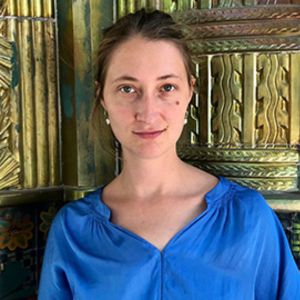
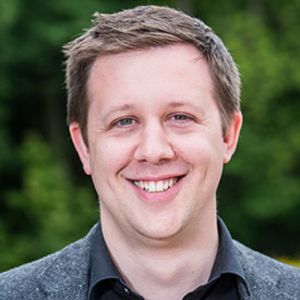
Dr Federico Fedele

Dr Federico Fedele - UKRI Future Leaderships Fellow 2026

About the Researcher

Federico Fedele develops semiconductor quantum technologies to investigate the thermodynamics of information processing. He completed his undergraduate degree in physics and a Master's degree in condensed matter physics at the University of Modena and Reggio Emilia, Italy. During his PhD at the Niels Bohr Institute in Denmark, he focused on scaling semiconductor spin-qubit architectures. In 2020, Federico joined the University of Oxford, and three years later, he was awarded a Junior Research Fellowship at New College. In 2026, he joined the Department of Physics at Lancaster University as a lecturer following the award of a UKRI Future Leaders Fellowship.

About the Project

Reconfigurable Hardware for Thermodynamic Computing

Federico's current research focuses on developing novel quantum devices for thermodynamic computing, an emerging computing paradigm that seeks to harness noise and thermal dissipation as computational resources to improve efficiency and enable new forms of information processing.

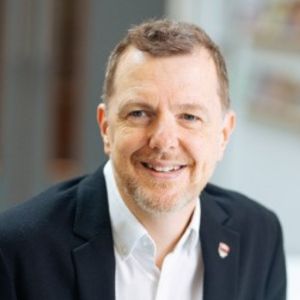
Dr George Dimitriadis

Dr George Dimitriadis - Marie Curie Fellow 2025

About the Researcher

Dr George Dimitriadis is an observational astrophysicist specialising in transient astronomy, with a particular focus on Type Ia supernovae, their progenitor systems, and the diversity of thermonuclear transients. He completed my PhD in Astronomy at the University of Southampton, following an MSc in Physics and Astronomy at the Anton Pannekoek Institute for Astronomy in Amsterdam and a Bachelor’s degree in Physics at Aristotle University of Thessaloniki.

About the Project

MC PDF: Mapping the diversity of Type Ia supernovae explosions

Type Ia supernovae (SNe Ia) are powerful white dwarf explosions that astronomers use to measure the expansion of the universe. They’ve been essential in discovering dark energy, but not all of them behave the same way, with some “peculiar” ones showing unexpected brightness and evolution. The project aims to understand these unusual explosions by studying the galaxies they occur in and estimating how old their parent star systems are. Using data from the Zwicky Transient Facility (ZTF), it will build the largest consistent sample of these peculiar events and compare them to theoretical models of how white dwarfs explode. The goal is to map out the full diversity of these supernovae, figure out their origins, and help ensure that future surveys like the Vera Rubin, Legacy Survey of Space and Time (LSST) can use only the most reliable ones for studying the universe.

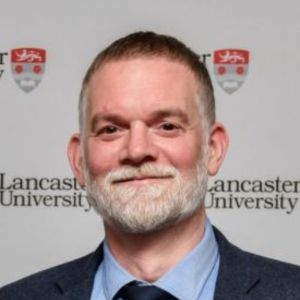
Dr Maria Walach

Dr Maria Walach - Ernest Rutherford Fellowship 2024

About the Researcher

Dr Maria Walach is a UKRI STFC Ernest Rutherford Fellow based in the Space and Planetary Physics Group. She study the interactions between the solar wind, the magnetosphere and the ionosphere - that's our most immediate magnetic environment and the uppermost part of the atmosphere, which links us to space. Her main research interests are in the energy transport in our terrestrial plasma environment and how it responds to events within the magnetosphere itself, and in space, which she does primarily by using data from spacecraft.

About the Project

Understanding the Energy Pathways of Earth's Magnetosphere

Electronic devices are part of our everyday lives. They allow us to message each other, provide energy for our homes, and control critical systems like air traffic, but they are vulnerable. Space Weather describes how electric and magnetic fields change around Earth. Just like normal weather, there are storms in space and when a Space Weather "geomagnetic storm" happens, our electronic devices can be damaged so it is extremely important that we can predict when these storms will happen. Maria's fellowship aims to gain new insights into space weather events, specifically looking into how energy unloading occurs during geomagnetic storms, using a combination of data from spacecraft and ground-based observatories to understand the amount of energy that is put into the magnetosphere and how this changes over time.

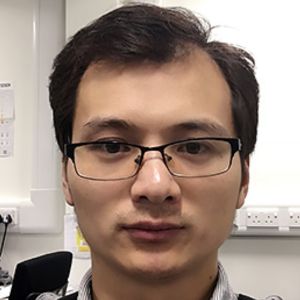
Dr Songjun Hou

Dr Songjun Hou - Leverhulme Early Career Fellow 2024

About the Researcher

Songjun is a Research Fellow in Physics working at the interface of nanoscience, quantum physics, and molecular electronics. His research focuses on understanding and controlling charge transport at the single-molecule level, with the aim of developing next-generation electronic devices that are smaller, more energy-efficient, and functionally novel. He has a particular interest in quantum interference effects in molecular systems and how these can be harnessed to design innovative device architectures.

About the Project

ECF: Towards Energy-efficient Nanodevices based on Quantum Interference (ENano)

The ENano project (Towards Energy-efficient Nanodevices based on Quantum Interference) aims to explore the use of individual molecules as functional components in electronic devices, particularly memristors. By leveraging quantum interference effects, the project seeks to design molecular-scale devices with tunable electrical properties, offering a potential pathway toward ultra-low-power computing technologies. This is especially relevant in the context of the rapidly increasing energy demands of artificial intelligence, where new device paradigms are needed to improve efficiency beyond conventional silicon-based electronics.

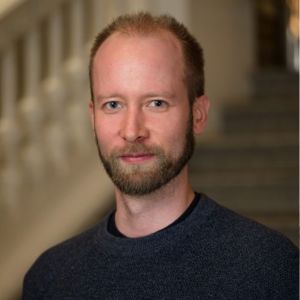
Dr Samuli Autti

Dr Samuli Autti - EPSRC Fellow 2022

About the Researcher

Samuli Autti is a Lecturer and EPSRC Fellow at Lancaster University in the UK. He has been awarded the IUPAP Young Scientist Prize 2020 for a range of superfluid discoveries, and the 2023 Nicholas Kurti Prize for his work on low-temperature physics.

About the Project

Pushing the boundaries of superfluid vacuum and coherence

Samuli's EPSRC fellowship supports investigations of the interfaces between classical and quantum physics in superfluid 3He, aiming to answer questions such as “what does it feel like to touch a quantum fluid” and “can we melt a time crystal”. He is also working on a superfluid-based dark matter detector, laboratory simulations of phase transitions in the early universe, and neutron star superfluid and vortex dynamics.

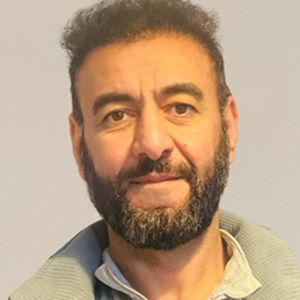
Dr Ali Ismael

Dr Ali Ismael - Leverhulme Early Career Fellow 2020

About the Researcher

Dr Ali Ismael is a theoretical physicist and former Leverhulme Trust Early Career Fellow (2020–2023) specialising in nanoscale science. With over 30 peer-reviewed publications including 20+ collaborations with experimentalists, his work focuses on leveraging quantum interference to develop novel nanoelectronics for thermoelectrics, sensing, and energy management.

About the Project

Quantum-Interference-Enhanced Thermolectric Materials

This research addresses the climate crisis by developing technologies to reclaim low-level waste heat from data centres, industry, and the human body. By exploiting room-temperature quantum effects, the project aims to design molecular-scale materials with a high dimensionless figure of merit (ZT). These materials will enable efficient, solid-state energy harvesting via the Seebeck effect and advanced on-chip Peltier-cooling for CMOS devices, providing a silent and sustainable alternative to traditional energy management.

Professor Edward Laird

Professor Edward Laird - ERC Fellowship 2019

About the Researcher

Professor Edward Laird is an experimentalist in quantum electronics. He completed his PhD at Harvard University, before undertaking a postdoctoral position at Delft University in the Netherlands. Prior to starting at Lancaster in 2018, he was an RAEng Fellow at Oxford University.

About the Project

MSI: ERC:MesoPhone

Edward's ERC project studied some the smallest moving objects that can be fabricated – carbon nanotubes, which vibrate like tiny guitar strings. Because they are so small and so light, they are ideal for measuring tiny forces, such as those due to quantum tunnelling by electrons, or due to residual damping in superfluids. As well as being a fascinating way to study quantum effects in electronics, they may one day allow for new types of microscope. The project allowed Professor Laird to establish his lab in the low-temperature group.

Dr Dima Zmeev

Dr Dmitry Zmeev - ESPRC Fellow 2017

About the Researcher

Dima Zmeev is a low-temperature experimental physicist at Lancaster University’s Ultralow Temperature Physics Laboratory. He completed his PhD at the Kapitza Institute in Moscow, where he studied NMR in superfluid helium-3. His research explores non-equilibrium phenomena in superfluids, such as quantum turbulence and overcritical superfluid currents. He also designs and builds specialized instruments for experiments conducted at temperatures near absolute zero.

About the Project

Superfluid 3He Far from Equilibrium

The Fellowship project titled “Superfluid 3He Far from Equilibrium” was aimed at investigating the reason behind unexpectedly fast superfluid flows in 3He. The Fellowship has allowed to build a strong team of physicists who managed to explain this mystery. The project has also allowed the creation of new, precise instruments enabling exploration of other physics phenomena far beyond what was envisaged initially in the proposal.

Dr Sam Jarvis

Dr Sam Jarvis - Leverhulme Early Career Fellow 2015

About the Researcher

Sam Jarvis is a Senior Lecturer in Physics, Director of the Lancaster IsoLab, and head of Lancaster XPS. He lead the Atomic Imaging and Surface Chemistry group at Lancaster University, where his research is driven by the desire to explore fundamental phenomena using atomic-scale imaging and molecular assembly, and to address major challenges in translating functional 2D and 3D molecular materials into real-world environments. His research spans funded projects addressing fundamental surface science, molecular electronics, thermoelectric green energy materials, single atom catalysts, green hydrogen generation, antiviral and antifouling surfaces, and atomically engineered 2D materials.

About the Project

Probing the mechanical properties of metal-coordinated molecules

This fellowship explored new ways to build and control molecular structures one bond at a time using advanced atomic-scale microscopy techniques. During this project, I explored methods for linking individual molecules together on insulating surfaces, a major challenge in nanotechnology that could help enable future nanoscale electronic devices and molecular circuits. Combining experimental physics and computational modelling, the project pushed the boundaries of single-molecule engineering and provided deeper understanding of chemical reactions at the level of individual atoms and bonds.

Professor Jim Wild

Professor Jim Wild - STFC Science in Society Fellow 2010

About the Researcher

Professor Jim Wild is the Professor of Space Physics and President of the Royal Astronomical Society. His research focuses on the links between the Sun, the Earth and Mars. As well as exploring the physics of the natural space environment, he studies the impact of space weather: the range of solar-driven phenomena that are now understood to be a risk to human technologies. Professor Wild has held significant leadership and governance roles in the wider research community and is engaged with policy-makers and industry stakeholders. Beyond his research, Prof Wild has a track-record of leadership in higher education, with considerable experience in university-level teaching, learning and recruitment in the STEM disciplines. He is an enthusiastic advocate for public engagement, a respected science communicator, a well-known speaker at public events and regular contributor to print and broadcast media.

About the Project

A place in the Sun - Taking Solar System Science to the Public

This STFC Science in Society Fellowship focussed on communicating the direct relevance of research into the space environment to the public and policy-makers. For example, society is becoming increasingly reliant upon modern technologies for utilities, communication, commerce, entertainment and security, but many of these technologies are susceptible to the rapid changes and disturbances in the space environment often referred to as “space weather”. Events at the Sun, such as solar flares and coronal mass ejections, can result in disturbed space weather in the near-Earth space environment and potentially disruptive consequences for technologies on the ground and in space. Large disturbances, on the same scale as the enormous solar flare observed by English astronomer Richard Carrington in 1859, could have a massive impact on space- and ground-based technologies such as communications satellites and electricity distribution networks, with obvious economic consequences. Solar system research is also relevant to global climate change, the search for life in our solar system and the hunt for potentially life-sustaining exoplanets – clearly issues of huge societal and cultural importance. This fellowship enabled Prof Wild to build upon his previous outreach activities and engage with public audiences via innovative channels.

Professor Rich Hayley - University Research Fellowship 2002

About the Researcher

Rich Haley is an experimental low temperature quantum matter physicist. His research runs from blue-skies work in superfluid helium-3 at world-record low temperatures through to the technology transfer of refrigeration, instrumentation and ultra-sensitive measurement techniques to partners internal and external to Lancaster University, both academic and industrial.

About the Project

Superfluid Helium-3: an Ideal System for Investigating Fundamental Physics

In the fellowship research, Rich showed that the quantum fluid behaviour of helium-3 could be used to simulate some of the fundamental physics of cosmological phase transitions in the early Universe shortly after the Big Bang.