

Meet the C4SAFE Team

[Image: Christopher Boswell via Adobe Stock]


A lighthouse emitting beams of light against a midnight blue sky.

Research Team

Head shot photo of Jan Bebbington, she has white hair that is tied back and is smiling.

Professor Jan Bebbington

Pentland Centre Director Professor Jan Bebbington focuses on issues that emerge for organisations as they seek to address sustainable development concerns. Training as a chartered accountant has led Jan to be especially interested in how business provides accounts of its activities, ambitions and achievements as well as how they make decisions (using appropriate data) that will enhance corporate stewardship. Over time Jan’s work has become more inter-disciplinary in nature because understanding what needs to be contributed by corporations requires a clear understanding of policy frameworks (such as the Sustainable Development Goals) and the issues to be addressed (such as climate and ecological science).
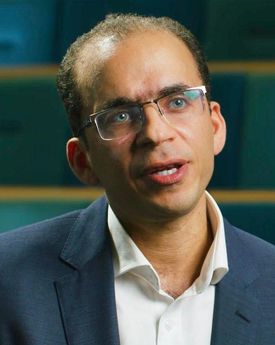

Head shot photo of Mahmoud Gad, he has short thinning black hair and wears glasses, he is talking.

Dr Mahmoud Gad

Dr Mahmoud Gad is an Associate Professor of Account and Finance at Lancaster University Management School. Mahmoud's research interests include corporate transparency, ethical business practices, and effective financial reporting. His work combines traditional accounting research with computational text analysis and natural language processing techniques. His scholarly contributions have been published in prestigious journals such as the Journal of Accounting and Economics. His impactful research on modern slavery has been featured in global media outlets like Reuters and Bloomberg, contributing to public awareness and discourse on critical ethical issues in business. His research has informed policy discussions, including providing evidence to House of Commons Select Committees and collaborating with the Financial Reporting Council on corporate reporting practices.

Photo of Dr Jean-Baptiste Jouffray, head and shoulders, Jean-Baptiste has a neutral expression.

Dr Jean-Baptiste Jouffray

Dr Jean-Baptiste Jouffray is a postdoctoral researcher exploring what the Anthropocene means for the ocean, what it entails for how we study marine social-ecological systems and what can be done to improve sustainability. His research focuses on the interlinked social, economic and ecological challenges that shape the new global ocean context, this involves inter- and trans-disciplinary approaches, ranging from the Hawaiian archipelago and indicators for effective coral reef management to the global seafood industry, the role of transnational corporations, and whether there could be entry points for sustainability considerations into mainstream financial mechanisms.

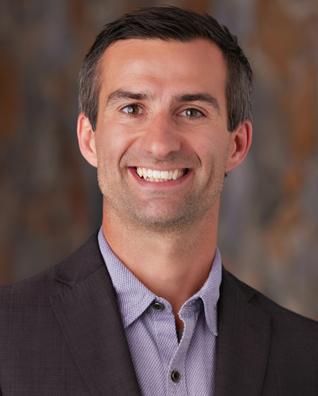
Photo of Dr John Virdin, head and shoulders visible, he is smiling.

Dr John Virdin

Dr John Virdin is an Associate Professor of the Practice, Nicholas School of the Environment at Duke University. John has over twenty years’ experience in studying and advising government policies to regulate human use of the oceans, particularly marine conservation policies to reduce poverty throughout the tropics. His focus has been largely on managing fisheries for food and livelihoods, expanding to broader ocean-based economic development policies, coastal adaptation and more recently reducing ocean plastic pollution.John directs the Ocean Policy Program at the Nicholas Institute for Energy, Environment & Sustainability, aiming to connect Duke University’s science and ideas to help policymakers solve ocean sustainability problems. He has collaborated in this effort with the United Nations Food and Agriculture Organisation and the United Nations Environment Program, as well as regional organisations such as the Abidjan Convention secretariat, the Organisation of Eastern Caribbean States, the Sub-Regional Fisheries Commission of West Africa and the Parties to the Nauru Agreement for tuna fisheries management in the Western Pacific.

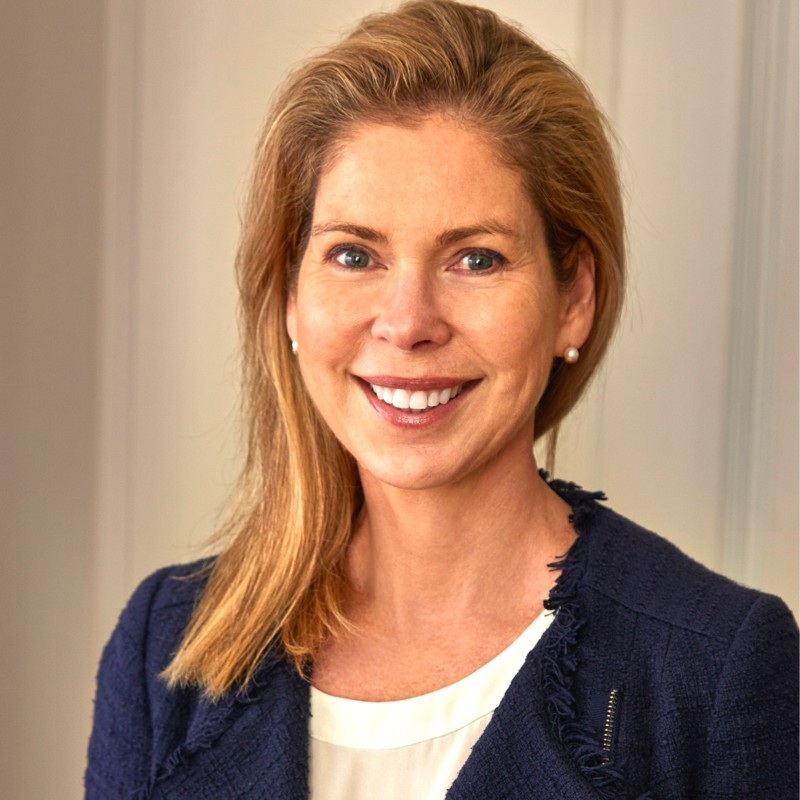
Head shot photo of Suzanne Johnson, she has long blonde hair and is smiling widely.

Suzanne Johnson

Suzanne Johnson is a Senior Advisor to the UN Global Compact and its work to advance a more sustainable ocean economy. She is also head of the Lloyd's Register Foundation's Sustainability Program and sits on the Lloyd's Register Advisory Board. She has wide ranging experience in the energy sector, having previously worked for energy and water companies in government and regulatory affairs, investor relations and finance. Her energy sector experience also includes investment management, where she was responsible for utilities debt for Schroder Investment Management. Suzanne has served as special assistant to Ambassador Jeane Kirkpatrick, former U.S. permanent representative to the United Nations at the American Enterprise Institute. Suzanne is interested in advancing the private sector’s contribution towards the Sustainable Development Goals. She is a member of the Council on Foreign Relations, a Governor of the Ditchley Foundation, a member of the William Pitt circle at Chatham House and is a Trustee for UK Associates of the Bermuda Institute of Ocean Science.

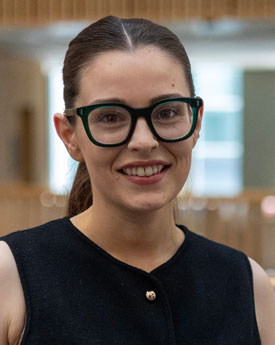
Head shot of Ophelia Chidgey, she has tied back black hair, thick framed glasses, she is smiling.

Dr Ophelia Chidgey

Dr Ophelia Chidgey is a senior research associate looking at labour exploitation in Ocean industries having previously completed her PhD looking at labour exploitation with a focus on women’s experiences at work in the global garment industry supply chains. Ophelia has a history in social sustainability and labour exploitation research and is a gender justice advocate with experience leading intersectional research and policy development across academia, civil society and grassroots spaces, specialising in translating complex research into practical policy solutions; Monitoring, Evaluation, and Learning (MEL) frameworks; and advocacy strategies that drive systemic change.

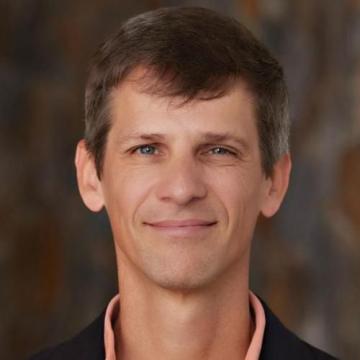
Head shot of Tibor Vegh, he has short cropped dark hair and a friendly smile.

Dr Tibor Vegh

Dr Tibor Vegh serves as a assistant policy research director with the Nicholas Institute for Energy, Environment & Sustainability. He is an applied social scientist with a background in environmental planning and economics. Tibor’s applied and policy-relevant research centres on the resilience of coupled human and natural systems; the economic, social, and environmental implications within the context of coastal adaptation; and the reliance on natural systems to benefit communities in the face of uncertainty and environmental risks. Tibor is a lead or collaborator on a wide range of projects where he contributes his economic, financial, and policy analysis skills, as well as his understanding of environmental planning approaches to solve real-world problems. His most recent work focuses on the social and economic aspects of coastal and urban resilience and multidimensional adaptation to risks in coastal and ocean systems.

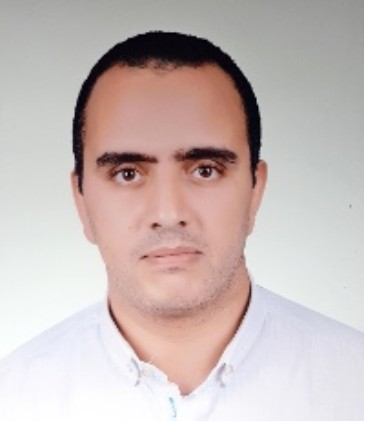
Head shot of Hesham Yousef, he has short dark hair and a serious expression.

Dr Hesham Yousef

Dr Hesham Yousef is a Senior Research Associate at the Pentland Centre for Sustainability in Business, Lancaster University. His research examines corporate sustainability, accountability and governance, with particular interest in how corporate reporting and management control shape organisational behaviour and sustainability outcomes. His published work addresses corporate social responsibility and tax avoidance practices, environmental performance, climate governance, biodiversity disclosure, and the adoption of management accounting innovations. His work has appeared in international journals including Journal of International Accounting, Auditing and Taxation, Corporate Social Responsibility and Environmental Management, Corporate Governance: The International Journal of Business in Society, and Journal of Accounting & Organizational Change. His current work focuses on examining corporate governance, reporting and accountability for social sustainability across ocean industries, with particular attention to worker protection, community impacts and supply-chain due diligence.

Head short of Elizabeth Vidler, she has short blonde hair and is smiling.

Elizabeth Vidler

Elizabeth Vidler is Project Manager for the C4SAFE research project at Lancaster University, where she coordinates project activities, supports collaboration across partner organisations, and helps ensure the successful delivery of research objectives. With a background spanning project management, systems administration, operational leadership, data analysis, and compliance, she has extensive experience in managing complex programmes and improving organisational processes. Elizabeth also works in data protection and information governance, bringing a strong focus on responsible data management, regulatory compliance, and effective project governance. Her combination of organisational expertise and commitment to collaborative working helps support the delivery of impactful research and innovation.