We welcome applications from the United States of America
We've put together information and resources to guide your application journey as a student from the United States of America.
Overview
Top reasons to study with us
3
3rd for Creative Writing
The Guardian University Guide (2026)
6
6th for Creative Writing
The Complete University Guide (2026)
7
7th for English
The Guardian University Guide (2026)
From the sonnet to the novel, and theatre to video-games, you will hone your craft with extensive professional support from our many celebrated novelists, poets, and playwrights. You’ll be part of a vibrant culture with literary events in the city’s Castle Quarter, multiple student-run literary journals, visiting authors, and opportunities to present your writing live.
Why Lancaster?
Develop your creative voice while also studying literature from classical civilisation to the present day
Enhance your writing through both text-based writing experiments and workshops focusing on your own writing
Explore the professional dimensions of Creative Writing, such as performing your work, editing, publishing, and marketing
Get involved with our four student-run literary journals: Cake, Lux, Flash, and Errant and our partners, the city-based LitFest
Be inspired by our rich programme of literary events on campus, online, and in the city’s historic Castle Quarter
Gain experience writing for graphic novels and comics thanks to our connections with the Lakes International Comics Arts Festival and our unique graphic novel collection in our campus library
Enjoy the benefits of our partnership with the archive-rich Wordsworth Museum, including internship opportunities in the English Lake District
English Literature and Creative Writing
Your time will be divided evenly between English Literature and Creative Writing.
Explore creative forms
Lancaster was one of the very first UK universities to teach Creative Writing. Today we continue to lead the way in the discipline with celebrated authors as tutors and students who go on to publish their work. Follow in the footsteps of celebrated authors such as Camille Ralphs, Andrew McMillan, Martha Sprackland, and Daisy Johnson, the youngest-ever author shortlisted for the Man Booker Prize.
In your own writing you will be able to explore traditional forms such as the short story, the novel, poetry, or scriptwriting, as well as non-traditional forms such as digital media, game writing, screenwriting, fantasy, and writing for young adults.
Acts of reading
You will also have the chance to explore texts from ancient civilisations to the present day studying the great names in literature, as well as voices that have been forgotten or overlooked.
We believe that reading is not passive but active. It is something that acts upon both the texts that we read and the world in which we live; and neither those texts nor the world is left the same. We are pioneers in experimental or creative forms of literary criticism as well as encouraging the study of established forms of literary scholarship, such as archival work, historicism, close reading, and literary theory. We support our students to dive deep, and experience literature in new and immersive ways.
A vibrant cultural community
We run many special literary events both on campus but also in spectacular locations such as the medieval Lancaster Castle, the awe-inspiring Priory or the archive-rich Wordsworth Centre at Grasmere in the Lake District. These events include:
Talks from visiting scholars and authors
Study retreat day in the Lake District
Social events such as the October Lecture and May Gathering
Lancaster also has a vibrant and exciting comics scene. We were the first institution to ever appoint a Professor in Graphic Fiction and Comic Art and our students can also benefit from our connection to the Lakes International Comics Art Festival which offers them professional and networking opportunities to develop their work in this field.
These events offer a sense of community and friendship through your studies. However, you can also take the opportunity to be more involved in organising, marketing and hosting these events. You will get to feel a part of something and develop your professional skills at the same time.
If you are interested in writing, publishing, and editing you could choose to get involved in one of our four student-run literary journals: Cake, Flash, Lux and Errant. You might volunteer to help at Lancaster’s Literature festival which attracts well-known authors from around the world (including some of our own author-tutors).
You could also apply for one our residential internships at Wordsworth Grasmere.This course offers a way into many professions by ensuring you develop such important work-place skills as researching, drafting, editing, listening, persuading and presenting. Your degree in English Literature and Creative Writing opens a world of opportunities where critical and creative thinking are highly valued.
Discover a wide expanse of genres and time periods, right up to newly published literature. Our students explain what it’s like to study English Literature at Lancaster University, from our close-knit community and small-group teaching, to the accessibility of our friendly teaching staff.
Creative Writing at Lancaster University
“You get so much freedom in terms of what you write and what you’re interested in, and you’re really encouraged to follow that”. Discover how you could forge your Creative Writing journey at Lancaster University.
Be part of Literary Lancaster - a vibrant community of critics and writers. Enjoy our rich programme of free literary events both on campus and in the city’s historic Castle Quarter.
We are always looking to support, encourage, and celebrate our students.
Your Placement Year
Sometimes known as a year in industry, your placement year will take place between your second and final year of study and this will extend your degree to four years.
Placements and Internships
Hear from students and employers on how Lancaster University could support you to gain real-world experience and bolster your CV with a placement or internship as part of your degree.
A placement year is an excellent way to...
try out a role that you may be interested in as a career path
start to build your professional network (some placement students are offered permanent roles to return to after they graduate)
develop skills, knowledge and experience to put you ahead of the field when you graduate
You'll spend your third year...
in a graduate-level position, where you’ll work for between nine and twelve months in the type of role that you might be considering for after you graduate. A very wide range of companies and organisations offer placements across all sectors.
As a full-time employee, you’ll have a job description with specific responsibilities and opportunities to access training and development, the same as other employees.
Our Careers and Placements Team...
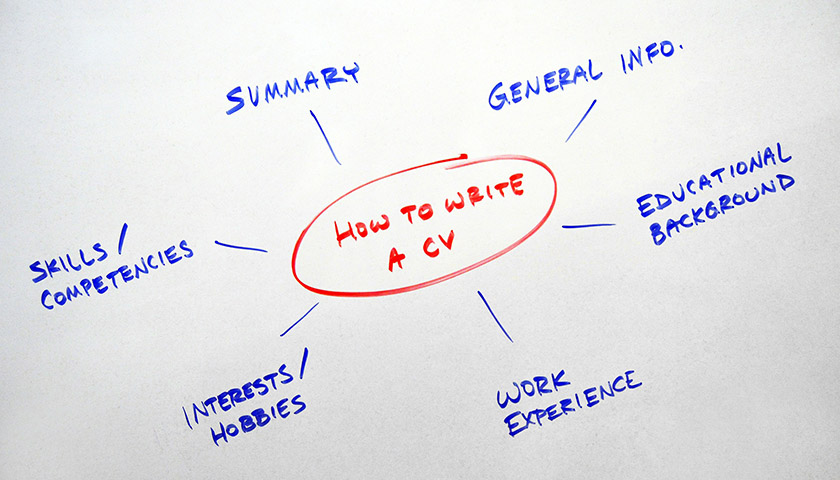
will help you to search and compete for a suitable placement with expert advice and resources, such as creating an effective CV, and tips for applications and interviews.
You will still be a Lancaster University student during your placement and we’ll keep in touch to check how you are getting on.
The university will...
use all reasonable effort to support you to find a suitable placement for your studies. While a placement role may not be available in a field or organisation that is directly related to your academic studies or career aspirations, all offer valuable experience of working at a graduate level and gaining a range of professional skills.
If you are unsuccessful in securing a suitable placement for your third year, you will be able to transfer to the equivalent non-placement degree scheme and continue with your studies at Lancaster, finishing your degree after your third year.
Careers
Our creative writing graduates have gone on to publish their own stories, novels, videogames, graphic novels, and poems with major publishers, and have had their scripts produced in national festivals and on national radio.
Our graduates also go on to careers in traditional fields such as publishing, journalism and arts management or becoming an editor, copywriter or librarian. Careers such as teaching, law and social work are open to English and Creative Writing graduates via postgraduate programmes.
New and exciting opportunities are emerging here in the creative and cultural industries such as museums, heritage and the arts, literary tourism, podcasting, game-writing, blogging, film, television, and social media. Others have gone on to careers in fields such as:
Publishing
Journalism
Game-writing
Copy-writing
Social media
Television and the media
Teaching
Librarianship
Art management
Careers and employability support
Our degrees open up an extremely wide array of career pathways in businesses and organisations, large and small, in the UK and overseas.
We run a paid internship scheme specifically for our arts, humanities and social sciences students, supported by a specialist Employability Team. The team offer individual consultations and tailored application guidance, as well as careers events, development opportunities, and resources.
Whether you have a clear idea of your potential career path or need some help considering the options, our friendly team is on hand.
Lancaster is unique in that every student is eligible to participate in The Lancaster Award which recognises activities such as work experience, community engagement or volunteering and social development. A valuable addition to your CV!
Find out more about Lancaster’s careers events, extensive resources and personal support for Careers and Employability.
Explore Student Futures
Our graduates go on to a diverse range of careers from academics to celebrated poets, screen-writers and novelists. Others go into a host of other careers closely related to literary study, such as teaching, publishing, copywriting and advertising. A degree in literary studies can, though, lead to other, less obvious futures, such as psychotherapy, emerging markets consultancy, data analysis and finance.
Find out about some of the careers our alumni have entered into after graduation.
Entry requirements
These are the typical grades that you will need to study this course. This section will tell you whether you need qualifications in specific subjects, what our English language requirements are, and if there are any extra requirements such as attending an interview or submitting a portfolio.
Qualifications and typical requirements accordion
AAB
36 Level 3 credits at Distinction plus 9 Level 3 credits at Merit
We accept the Advanced Skills Baccalaureate Wales in place of one A level, or equivalent qualification, as long as any subject requirements are met.
DDD
A level at grade B plus BTEC(s) at DD, or A levels at grade AB plus BTEC at D
35 points overall with 16 points from the best 3 HL subjects
We are happy to admit applicants on the basis of five Highers, but where we require a specific subject at A level, we will typically require an Advanced Higher in that subject. If you do not meet the grade requirement through Highers alone, we will consider a combination of Highers and Advanced Highers in separate subjects. Please contact the Admissions team for more information.
Distinction overall
Help from our Admissions team
If you are thinking of applying to Lancaster and you would like to ask us a question, complete our enquiry form and one of the team will get back to you.
Delivered in partnership with INTO Lancaster University, our one-year tailored foundation pathways are designed to improve your subject knowledge and English language skills to the level required by a range of Lancaster University degrees. Visit the INTO Lancaster University website for more details and a list of eligible degrees you can progress onto.
Contextual admissions
Contextual admissions could help you gain a place at university if you have faced additional challenges during your education which might have impacted your results. Visit our contextual admissions page to find out about how this works and whether you could be eligible.
Course structure
We continually review and enhance our curriculum to ensure we are delivering the best possible learning experience, and to make sure that the subject knowledge and transferable skills you develop will prepare you for your future. The University will make every reasonable effort to offer programmes and modules as advertised. In some cases, changes may be necessary and may result in new modules or some modules and combinations being unavailable, for example as a result of student feedback, timetabling, Professional Statutory and Regulatory Bodies' (PSRB) requirements, staff changes and new research. Not all optional modules are available every year.
Tracing the evolution of literature over time and in time, you will engage with an array of literary genres including plays, films, short stories, novels, poetry, essays and the graphic novel. You will encounter a wide range of literature - from the Middle Ages to the 21st Century, moving from Chaucer, through Shakespeare and Milton, to Virginia Woolf. You’ll also study contemporary writers such as Alison Bechdel and Paul Muldoon, and many others.
This is a multi-genre workshop that introduces you to the art of creative writing at university level. It is taught through a mix of lectures and tutor-led workshops with the focus ultimately on the development of your own portfolio. This portfolio could take any form and be devoted to any genre (poetry, prose, drama, screenplay etc).
You’ll be encouraged to experiment with various forms and genres, to explore new approaches in drafting and editing your own work, and to practise the gentle art of responding to the work of fellow students. The module will introduce you to a range of exciting texts and helpful terminology, and offer insight from published authors. It will allow you to practise technique, mature your voice and nurture your writerly instincts.
Optional
optional modules accordion
What does it mean to study media today? In this module, you’ll be introduced to major debates, theories and thinkers in studying media and culture.
You will encounter a diverse range of material from different media, including: television, film, news, advertisements, social media, video games and more.
You will explore the intersections between our cultural environment and our identities, aspirations, beliefs and value systems, to develop essential skills in critical thinking and analysis.
In order to ask questions about the way language works in society, how it connects with the mind/brain or how it is acquired by computers, you first need to know something about the foundational elements of language. This module will introduce you to the building blocks of human language.
You will learn about sounds in language, how they are pronounced and how they can be combined to form words. We will teach you about the way words themselves are structured. You’ll also explore how language puts words together to build sentences of different types and how sentences express meaning, in isolation and in context.
By the end of the module, you will be familiar with the essentials of phonetics, phonology, morphology, syntax, semantics and pragmatics. This knowledge will enable you to study those areas in more detail, as well as other areas of linguistics or English language studies which build on them.
This module explores the role of the arts in building community, identity and confidence. You will engage with a variety of different art forms (such as painting, theatre, fiction, designed artefacts and film) and develop your own voice via collaborative projects such as a podcasts, video essay or presentation. You will also engage in individual critical reflection for example via a blog, journal or research project.
This module fosters co-operation, intellectual experimentation and self-assurance.
Look beyond the boundaries of traditional courses in English Literature and explore a wide and exciting range of literatures in English and translation from antiquity to the present day. Discover texts that have influenced the development of literary English, from the Bible and classical figures such as Ovid and Homer, through Medieval and Early Modern authors such as Dante and Rabelais to contemporary world authors in translation such as Kafka and Rushdie.
Develop your critical reading skills, become a more reflective writer and work on being an effective communicator. We'll journey through genres (such as fantasy, tragedy and life writing), explore the social, cultural, aesthetic, political and economic importance of each one, and discuss the possibilities offered by different approaches.
The focus here is on reflective work, while you will produce more creative work in your other modules. You will build your confidence and critical vocabulary, as you experiment with a range of genres, forms and methodologies.
Britain is one of the most successful and influential film industries in world cinema. In this module you will explore the key films, filmmakers and traditions that have shaped British cinema over the past century. Through a study of major genres, styles, filmmakers and themes, you will consider how British cinema has evolved and reflect on historical cinema-going habits.
Alongside this historical overview, you will engage with critical debates. You’ll examine the relationship between national identity and cinema, the role of realism and recurring preoccupations with emotional repression, race, gender and social class. You will also explore how British cinema captures and shapes ideas of ‘’Britishness’’.
Each week, screenings of case-study films by influential British directors will be paired with key readings, providing a foundation for discussion. By the end of the module, you will have developed a critical understanding of British cinema’s distinctive characteristics and its role within film history and culture.
Core
core modules accordion
Explore literary criticism as it is now and what it may yet become. You will have the opportunity to consider a whole range of major theoretical and philosophical concepts, such as:
The body
Race
Gender
Violence
Ecology
God
Time
Death
War
Self
The animal
You will study a range of fascinating modern thinkers, ranging from Marx, Freud and Nietzsche, through to more recent figures such as Simone Weil, Walter Benjamin, Jacques Derrida, Judith Butler, Fred Moten, Cornel West and Sara Ahmed.
Develop the art of creative writing in this multi-genre workshop. Taught through a mix of lectures and tutor-led workshops the focus is on the development of your own portfolio. This could take any form and be devoted to any genre (poetry, prose, drama, screenplay etc). Working at university level, you will develop your understanding of various forms, the graft involved in editing your own work and the art of responding to the work of fellow students.
Develop key techniques for writing fiction and hone the skills you need to write short stories and/or novels.
Through workshops, discussions, set reading from a range of contemporary writers and generative writing prompts, you’ll develop confidence in creating character, worldbuilding, establishing narrative voice, experimenting with point of view and constructing engaging structures and plot.
You will draw on a range of techniques according to your own interests. In your reflective essay you will consider the various ways short fiction and the novel uniquely deploy these techniques.
Optional
optional modules accordion
Learn to write drama for the theatre and audio, and develop your awareness of the processes by which a written script makes its way to live performance and recorded production.
You will be taught through weekly seminars/workshops in which you will explore the effects that different staging/recording approaches and performance strategies have on your scripts.
Over the course of the module, you will develop your own writing styles and gain an awareness of the professional requirements of playwriting for the stage and for radio and podcasts.
How does our lived experience translate into poetry? And how does poetry crystallize or transform experience through language and form? These and many other questions are explored in this module as you will read as well as write poetry; for the writing of poetry is dependent not only your experience but also your abilities as a reader and interpreter of poems.
You will study the base structures of poetry – from the line-ending to more complex forms like sonnets and sestinas; and you will be encouraged to seek out new reading as a result of class discussion.
Explore a wide range of literature and drama from the medieval and early modern periods. The module situates medieval and early modern literature in its relevant historical and cultural contexts.
You will develop skills in the close reading of medieval and early modern texts.
Authors studied may include Chaucer, the Gawain poet, Margery Kempe, Mary Wroth, Sir Philip Sidney and Christopher Marlowe.
Examine some of the ways in which literature has explored and expressed the complexity of belief and doubt, redemption and apocalypse, damnation and revelation. You will consider the ways in which moments, motifs and ideas indebted to the sacred can be found within a wide range of texts.
Although welcoming consideration of all three Abrahamic faiths, we will focus primarily on Christian traditions and texts.
Authors studied may include:
Julian of Norwich
Gerard Manley Hopkins
Oscar Wilde
G. K. Chesterton
James Baldwin
Margaret Atwood
Toni Morrison
Exploring the adaption of literature to film and other media, this module focuses on the adaptation of literary texts to such forms as theatre, graphic novel, film, television, song, and game.
You will be invited to reflect on adaptation as a powerful and complex cultural process, one that interprets literature as well as adapts it.
Throughout the module you will normally complete either a critical essay on adaptation OR a creative project (plus short essay) that enables you to produce your own work of adaptation. This may take many forms -- written, (audio) visual, musical, digital, or three-dimensional and/or take the form of a game, production or performance, etc.
What we call ‘American Literature’ and how we define America and ‘the American experience’ depends on who is writing and to whom. In this module you will encounter many different voices, many conflicting and contrasting views, a diversity of complex experience and a great range of writing in form and style.
You will explore such questions as: What role do different literary forms play in narrating the self? How does American writing seek to establish a new way of looking at the world? And how and why does literature help shape forms of protest and new critiques of modernity?
The years of Queen Victoria’s reign (1837-1901) saw great social, political and cultural transformation. Changing social conditions, extraordinary scientific breakthroughs and the emergence of new technologies all altered the ways in which Victorians thought about themselves and their environment. The literature of the period responded resourcefully to the turbulent circumstances from which it emerged.
In this module, you will examine a wide range of Victorian writing, including novels, short fiction, poetry, drama and non-fictional prose and will explore and interrogate all the complexities of the Victorian age.
Reflect on what it means to do criticism in a post-theoretical age. This module asks what happens to literary interpretation after all its many theoretical upheavals – from Marxism and feminism to postcolonialism and queer theory. Is it time to get back to the close reading of literature? Is there still room for pleasure, appreciation and creativity in the practice of criticism? We might question whether literature, in the traditional sense, even exists anymore.
You will pose these questions in relation to a range of traditional and non-traditional texts.
Explore how ideas can be developed into real-world projects with lasting value. Through hands-on collaboration and problem-solving, you will develop innovative projects, learn how to bring ideas to life and explore ways to sustain them.
Whether you are working in a team or individually, you will be encouraged to experiment with different approaches to making a difference in artistic, cultural, social and community spaces.
Core
core modules accordion
This module will allow you to spend the year working in a graduate-level placement role in the industry or sector that interests you most. Throughout the year, you will build an awareness of what is required in the professional workplace whilst developing a range of transferable skills.
During the module you will reflect on and critically analyse: your own career readiness, the ongoing development of your self-awareness in terms of skills and professional knowledge, and your understanding of current workplace practices and professional etiquette.
Our Careers and Placements Team will support you during your placement with online contact and learning resources.
Core
core modules accordion
In this multi-genre writing workshop you will develop your writing toward professional levels. Taught through a mix of lectures and tutor-led workshops, the focus is on the development of your own portfolio.
This portfolio could take any form and be devoted to any genre (poetry, prose, drama, screenplay etc). The lectures will include expert guidance from our author-tutors on how to develop your writing professionally and towards publication.
Optional
optional modules accordion
Many cutting-edge forms of creative writing work beyond written text. This module will develop your understanding of popular contemporary writing and writing industries with an advanced study of two key forms that incorporate visual elements and elements of narrative design – specifically: graphic novels and games.
You will explore the possibilities of narrative design, including its visual and interactive elements, and this will allow you to engage both critically and creatively with a branch of writing largely associated with the digital domain.
Working in small groups, you will develop your own ideas, and through workshopping and playtesting, reflect on the narrative and design decisions you have made.
What happens when radically different forms of art meet? How do these fused forms change our understanding of the world? We will draw on material from different periods and continents, to explore works of art where, for example, film meets history, poetry meets philosophy, fine art meets sociology, religion meets fiction, and theatre meets politics.
What do we understand by queerness? Looking back at earlier interpretations, we imagine how queerness might evolve—how it might be lived, felt and understood in the future.
You will explore queer futures from a range of perspectives and viewpoints, while examining both feminist and queer theory, as well as queer media and cultural texts and material relating to areas such as activism, politics and healthcare.
Study key texts and contexts from a short but remarkably intense period of literary history. Encompassing the work of writers such as Wordsworth, Blake, Keats and Shelley, you will explore the role of nature, the imagination and the sublime. You will also consider the emergence of the Gothic tradition and examine the interactions between literary and politics in a turbulent era of revolution and change.
What is the contemporary? When did the present cultural moment start and how might it end. How do?writers?respond to the challenge, excitement,?pressure?and novelty of the ‘now’??And how is imaginative writing faring in the digital age?
You will consider these questions in relation to the work of such major authors as Ali Smith, Kazuo?Ishiguro?and Colson Whitehead.
Examining a wide range of texts and authors from early periods to the age of the climate crisis, this module will explore the many and various ways in which the non-human world is celebrated, championed and exploited by the literary imagination.
You will explore questions such as:
What do we mean by the ‘the environment’?
What experiences, meanings and values do we take from, or discover in our surroundings?
How have writers characterised the environment and in what ways might the literary imagination be significant for contemporary environmental concerns?
What is critical theory? Why is it one of the most controversial areas of contemporary culture today? And to what extent do theoretical ideas about power, race, gender and identity change the way we think about the world?
On this module you will explore a range of classic and contemporary themes, trends and topics in critical theory from the 1960s to the present. You’ll take a deep dive into key thinkers like Foucault, Deleuze and Agamben and key concepts like biopolitics, globalisation and animal studies.
As you enter level 6 with a grounded understanding of traditional and emerging forms of creative writing, this advanced module offers you the space to examine and practice experimental and radical contemporary forms that challenge what writing can mean, for the moment and beyond the moment it is written.
Specifically, this module will be focusing on contemporary short forms – including (but not limited to) lyric poetry, the vignette and flash fiction. You will explore the way that form responds to the moment – both a moment in time and the moment we are living in – and how these forms respond to questions of identity, politics, the body, mental health, disability, the climate crisis and more.
In this module you will work in a combination of prose and creative non-fiction to explore how personal experience can fuel both fiction and creative nonfiction and how authorial voice is created in dialogue with the self. You will learn to critically interrogate the ethics of speaking on behalf of ourselves and of others.
This advanced module interrogates the positionality of the author in relation to their audience and poses some fundamental questions about what it means to write from and beyond experience in the contemporary context.
The reading list is refreshed annually in response to developments in the field, as is appropriate for an advanced course. It offers a sustained exploration of the practice of Creative Writing across evolving or emerging forms and genres.
The final-year Dissertation is your opportunity to devise, research and explore a topic of your own choice through a programme of directed independent study. You will be helped to begin your thinking at the end of your second year and then, through your final year, you will develop your research, thinking and writing, as you build toward a substantial, self-directed project.
Almost anything is possible; for example, you could choose to explore famous literary names or themes, or research obscure figures and unusual topics. You might draw on the University Library’s special collections, or venture way beyond Lancaster to develop your research. Perhaps you will be inspired by the medievalism of historic Lancaster or the Romanticism of nearby Lake District or be drawn to the far textual shores of the digital world.
You can focus your work towards a professional career or build towards postgraduate study at master’s level. Finally, you can opt to write in classic literary critical styles or push the boundaries of literary study in new and startling ways.
Study the work of four giants of nineteenth-century British fiction: Jane Austen, Anne Brontë, Charlotte Brontë and Emily Brontë.
Focusing on questions of class, gender, power, environment and artistic technique, you will explore the tensions between Austen and the Brontes (south vs north, Regency vs Victorian, realism vs Gothic) and trace the imaginative continuities between them.
Both the Gothic and science fiction emerged in response to the 18th century ‘age of reason’ and the Western world’s investment in logic and progress. The Gothic explores the terrors of the past and its return while science fiction imagines alternative futures; in doing so, both voice the concerns of the present.
You will study both classic literary texts and contemporary film and other media. Exploring what the Gothic and science fiction each do, rather than what they each are, you will consider how these genres address some of the most pressing questions facing contemporary Western culture.
Ben Jonson claimed of Shakespeare ‘he was not of an age but for all time.’ This module, however, examines Shakespearean drama and poetry in its own time and as a platform in which early modern debates about agency and government, family and national identity, were put into play. The stage was and is a place in which questions of gender, class and race, gain immediacy through the bodies and voices of actors.
By examining texts from across Shakespeare’s career, you will explore their power to shape thoughts and feelings in both their own age and in ours. You will consider how, in the past and in the present, Shakespeare’s texts exploit the emotional and political possibilities of poetry and drama.
The assessment of this module normally concludes with either an essay OR a creative engagement (e.g. reading, performance, artwork) plus critical reflection.
The early 20th century explosion of literary experimentation known as Modernism was a movement informed by the catastrophe of the First World War, the convulsion that was the Russian Revolution and a host of dramatic developments in art, music, cinema, philosophy, theology, politics and science.
Alongside reading the literature of the time you will also consider various related artistic movements such as Dadaism, Surrealism and Vorticism. Authors covered typically include T. S. Eliot, Virginia Woolf, Jean Rhys and W. B. Yeats.
Fees and funding
Our annual tuition fee is set for a 12-month session, starting at the beginning of each academic year.
You will be able to borrow many books free of charge from the university library, however most students prefer to buy their own copies of at least some of the texts. Costs vary depending on whether these are bought new or second hand.
There may be extra costs related to your course for items such as books, stationery, printing, photocopying, binding and general subsistence on trips and visits. Following graduation, you may need to pay a subscription to a professional body for some chosen careers.
Specific additional costs for studying at Lancaster are listed below.
College fees
Lancaster is proud to be one of only a handful of UK universities to have a collegiate system. Every student belongs to a college, and all students pay a small college membership fee which supports the running of college events and activities. Students on some distance-learning courses are not liable to pay a college fee.
For students starting in 2026, the one-time fee for undergraduates and postgraduate research students is £40. For postgraduate taught students, the one-time fee is £15.
Computer equipment and internet access
To support your studies, you will also require access to a computer, along with reliable internet access. You will be able to access a range of software and services from a Windows, Mac, Chromebook or Linux device. For certain degree programmes, you may need a specific device, or we may provide you with a laptop and appropriate software - details of which will be available on relevant programme pages. A dedicated IT support helpdesk is available in the event of any problems.
The University provides limited financial support to assist students who do not have the required IT equipment or broadband support in place.
Study abroad courses
In addition to travel and accommodation costs, while you are studying abroad, you will need to have a passport and, depending on the country, there may be other costs such as travel documents (e.g. visa or work permit) and any tests and vaccines that are required at the time of travel. Some countries may require proof of funds.
Placement and industry year courses
In addition to possible commuting costs during your placement, you may need to buy clothing that is suitable for your workplace and you may have accommodation costs. Depending on the employer and your job, you may have other costs such as copies of personal documents required by your employer for example.
The fee that you pay will depend on whether you are considered to be a home or international student. Read more about how we assign your fee status.
Home fees are subject to annual review, and are liable to rise each year in line with UK government policy. International fees (including EU) are reviewed annually and are not fixed for the duration of your studies. Read more about fees in subsequent years.
We will charge tuition fees to Home undergraduate students on full-year study abroad/work placements in line with the maximum amounts permitted by the Department for Education. The current maximum levels are:
Students studying abroad for a year: 15% of the standard tuition fee
Students taking a work placement for a year: 20% of the standard tuition fee
International students on full-year study abroad/work placements will also be charged in line with the maximum amounts permitted by the Department for Education. The current maximum levels are:
Students studying abroad for a year: 15% of the standard international tuition fee during the Study Abroad year
Students taking a work placement for a year: 20% of the standard international tuition fee during the Placement year
Please note that the maximum levels chargeable in future years may be subject to changes in Government policy.
Scholarships and bursaries
You will be automatically considered for our main scholarships and bursaries when you apply, so there's nothing extra that you need to do.
You may be eligible for the following funding opportunities, depending on your fee status:
Unfortunately no scholarships and bursaries match your selection, but there are more listed on scholarships and bursaries page.
Scheme
Based on
Amount
Based on {{item.eligibility_basis}}
Amount {{item.amount}}
We also have other, more specialised scholarships and bursaries - such as those for students from specific countries.
The information on this site relates primarily to the stated entry year and every effort has been taken to ensure the information is correct at the time of publication.
The University will use all reasonable effort to deliver the courses as described, but the University reserves the right to make changes to advertised courses. In exceptional circumstances that are beyond the University’s reasonable control (Force Majeure Events), we may need to amend the programmes and provision advertised. In this event, the University will take reasonable steps to minimise the disruption to your studies. If a course is withdrawn or if there are any fundamental changes to your course, we will give you reasonable notice and you will be entitled to request that you are considered for an alternative course or withdraw your application. You are advised to revisit our website for up-to-date course information before you submit your application.
More information on limits to the University’s liability can be found in our legal information.
Our Students’ Charter
We believe in the importance of a strong and productive partnership between our students and staff. In order to ensure your time at Lancaster is a positive experience we have worked with the Students’ Union to articulate this relationship and the standards to which the University and its students aspire. Find out more about our Charter and student policies.
Open days and campus tours
Visit campus and put yourself in the picture at an open day or campus tour.
Take five minutes and we'll show you what our Top 10 UK university has to offer, from beautiful green campus to colleges, teaching and sports facilities.
Most first-year undergraduate students choose to live on campus, where you’ll find award-winning accommodation to suit different preferences and budgets.
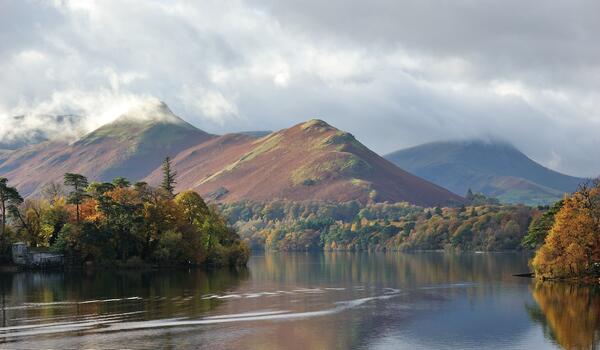
Our historic city is student-friendly and home to a diverse and welcoming community. Beyond the city you'll find a stunning coastline and the world-famous English Lake District.