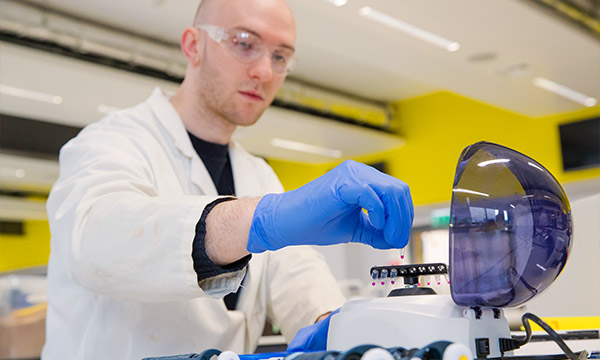
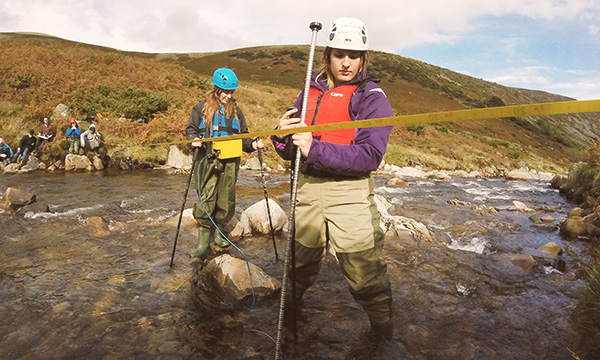
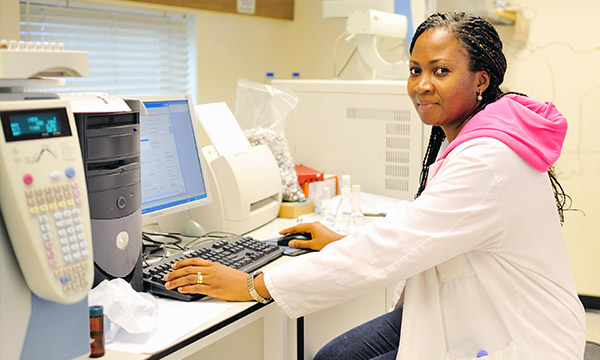
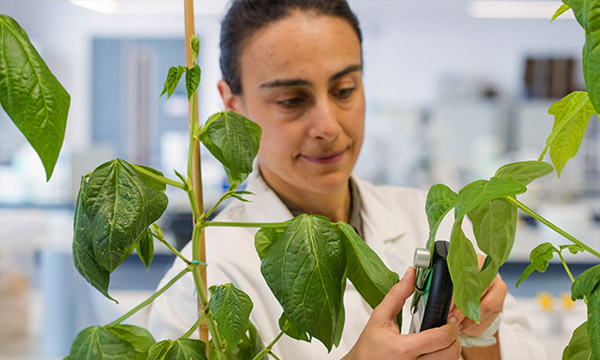
We offer a range of PhDs funded by different sources, such as research councils, industries or charities. As a PhD student, you will become a valued member of a research group. Here you will work with internationally respected academics, post-doctoral research associates and technicians. Find out more about our research groups below.
How to Apply
To apply for a funded PhD please read the advertised project information carefully as requirements will vary between funders. The project information will include details of funding eligibility, application deadline dates and links to application forms. Only applicants who have a relevant background and meet the funding criteria can be considered.
Current PhD Opportunities
Current PhD Opportunities List accordion
Recent discoveries have revealed that grassland plants form symbioses with a much broader range of fungi than previously thought, notably Mucoromycotina ‘fine root endophytes’ (MFRE), which co-occur alongside more commonly described arbuscular mycorrhizal fungi. This exciting project seeks to disentangle the roles of both MFRE and arbuscular mycorrhizal fungi in providing key ecosystem functions and resilience to grasslands. The project will use a suite a cutting-edge technologies applied to field, greenhouse and laboratory experiments to advance our understanding of the diversity and function of these ‘hidden’ root-associated fungal networks. The PhD project will be led from Lancaster University as part of a prestigious Royal Society Faraday Discovery Fellowship led by Professor Katie Field at the University of Sheffield and in collaboration with Silvia Pressel at the Natural History Museum in London, offering superb opportunities for training and development, and interaction with a large team of scientists across institutions.
Studentship funding
Full studentships (UK tuition fees and stipend (£20,780 2025/26 [tax free])) for UK students for 3.5 years. Unfortunately, funding is not available to cover fees for non-UK students.
Dates
Deadline for applications: 1 February 2026
Start Date: October 2026
For further details, please contact Professor David Johnson at Lancaster Environment Centre.
Rename the referee form with your ‘Name and Reference’, e.g., Joe Bloggs Reference. Send the renamed reference form to two referees and request them to forward the referee document to d.johnson18@lancaster.ac.ukPlease note only Word or pdf files are accepted. It is important that you ensure references are submitted by the closing date or as soon as possible.
You will receive a generic acknowledgement in receipt of successfully sending the application documents.
Please note that only applications submitted as per these instructions will be considered.
Please note that, if English is not your first language, you will be required to provide evidence of your proficiency in English. This evidence is only required if you are offered a funded PhD and is not required as part of this application process.
Please note that, if you do not hear from us within four weeks of the closing date then you have been unsuccessful on this occasion. If you would like feedback on your application, please contact the supervisors of the project.
Professor Jess Davies (Centre for Sustainable Soils, LEC), Professor David Johnson (Ecology, LEC), Professor John Quinton (Environmental Science, Centre for Sustainable Soils, LEC) and Will Rundle (NexusRegen)
Project Description
Every year, millions of tonnes of soil are excavated from UK construction sites and large volumes ends up in landfill. Soil makes up nearly 60% of all materials sent to landfill in the UK, making construction one of the nation’s biggest drivers of soil degradation, with consequences for biodiversity, greenhouse gas emissions, climate resilience, and water resources.
This PhD will explore how we can reduce soil disturbance, increase re-use and prevent loss to landfill. Working with and supported by leading soil scientists and industry partners, you will analyse how soils move through the construction sector, measure how their quality changes during handling, and assess how re-used soils perform once re-installed at new sites. Using a mix of data analysis, fieldwork, and lab studies, you’ll help design practical strategies for a more circular and sustainable construction industry – turning waste into a valued resource and helping shape better policy and practice for the future.
General eligibility criteria
Enthusiasm, independence, self-motivation, curiosity and the ability to communicate to a range of audiences are all distinctly advantageous qualities for a PhD. Applicants would normally be expected to hold a minimum of a UK Honours degree at 2:1 level or equivalent in a relevant degree course. However, applicants who have gained experience in relevant fields through non-traditional routes are strongly encouraged to apply. We particularly welcome applications from Black, Asian or Ethnic Minorities candidates, candidates who are in the first generation of their family to go to university, candidates who have been in care or who have been a young carer, and candidates from a low-income background.
The ideal candidate will have an interest in sustainable soils, construction and/or circular economy disciplines. A broad range of environmental and engineering academic and industry backgrounds will be considered. The project will involve quantitative analysis, field and laboratory work. Experience in these areas is an advantage.
Studentship funding
A tax-free stipend will be paid at the standard UKRI rate. This is a fully funded studentship of 3.5 years for UK/Home students.
Enquiries
Interested applicants are welcome to get in touch to learn more about the PhD project. Please contact Professor Jess Davies, jess.davies@lancaster.ac.uk for more information.
Rename the referee form with your ‘Name and Reference’, e.g., Joe Bloggs Reference. Send the renamed reference form to two referees and request them to forward the referee document to lec.pgr.applications@lancaster.ac.uk
Please note only Word or pdf files are accepted. It is important that you ensure references are submitted by the closing date or as soon as possible.
You will receive a generic acknowledgement in receipt of successfully sending the application documents.
Please note that only applications submitted as per these instructions will be considered.
Please note that, if English is not your first language, you will be required to provide evidence of your proficiency in English. This evidence is only required if you are offered a funded PhD and is not required as part of this application process.
Please note that, if you do not hear from us within four weeks of the closing date then you have been unsuccessful on this occasion. If you would like feedback on your application, please contact the supervisors of the project.
Kourmouli, A. , Winter, G., Andrews, K., Cory, T., Elliott, P., Palmer, E., Stevens, P., Davies, J., Stevens, C. and Quinton, J. N. (2024). Potential for a Soil Reuse and Storage system in England. Lancaster: Lancaster University 10.5281/zenodo.10943857
Dr Alex Bush (Ecology, Lancaster Environment Centre) and Professor Rachel McCrea (School of Mathematical Sciences)
Project Description
The UK’s degraded landscapes demand large-scale ecological restoration, yet assessing success is difficult due to ecosystem complexity, natural variability, and long recovery times. Multiple new monitoring technologies—such as remote sensing, AI-based image analysis, and acoustic monitoring—offer rich but diverse data at varying resolution, spatial or temporal scales, and costs. To demonstrate the reward for restoration investments, but at a cost that doesn’t threaten the project’s viability, a key challenge is to design statistically robust and adaptive monitoring programs that integrates these heterogeneous data sources to track multiple indicators of ecosystem recovery. Ultimately, it must not only detect when restoration succeeds, but also reveal how and why outcomes differ, providing feedback to improve restoration strategies. This project will suit a candidate with a passion for Nature, and a razor-sharp focus on data quality – for we cannot afford to waste further time and opportunities to begin the recovery.
General eligibility criteria
Enthusiasm, independence, self-motivation, curiosity and the ability to communicate to a range of audiences are all distinctly advantageous qualities for a PhD. Applicants would normally be expected to hold a minimum of a UK Honours degree at 2:1 level or equivalent in a relevant degree course. However, applicants who have gained experience in relevant fields through non-traditional routes are strongly encouraged to apply. We particularly welcome applications from Black, Asian or Ethnic Minorities candidates, candidates who are in the first generation of their family to go to university, candidates who have been in care or who have been a young carer, and candidates from a low-income background.
The ideal candidate will be motivated by a deep interest in ecological and environmental concepts, will have some experience coding, and like working on Data Science problems. Further experience in statistics or maths would be desirable, but not essential, and likewise no particular background in ecology or environmental science is required.
Studentship funding
A tax-free stipend will be paid at the standard UKRI rate. This is a fully funded studentship of 3.5 years for UK/Home students.
Enquiries
Interested applicants are welcome to get in touch to learn more about the PhD project. Please contact Alex Bush (alex.bush@lancaster.ac.uk) for more information.
Rename the referee form with your ‘Name and Reference’, e.g., Joe Bloggs Reference. Send the renamed reference form to two referees and request them to forward the referee document to lec.pgr.applications@lancaster.ac.uk
Please note only Word or pdf files are accepted. It is important that you ensure references are submitted by the closing date or as soon as possible.
You will receive a generic acknowledgement in receipt of successfully sending the application documents.
Please note that only applications submitted as per these instructions will be considered.
Please note that, if English is not your first language, you will be required to provide evidence of your proficiency in English. This evidence is only required if you are offered a funded PhD and is not required as part of this application process.
Please note that, if you do not hear from us within four weeks of the closing date then you have been unsuccessful on this occasion. If you would like feedback on your application, please contact the supervisors of the project.
Bush, A., Simpson, K. H., & Hanley, N. (2024). Systematic nature positive markets. Conservation Biology, 38, e14216. https://doi.org/10.1111/cobi.14216
Giakoumi, Sylvaine et al. Advances in systematic conservation planning to meet global biodiversity goals, Trends in Ecology & Evolution, Volume 40, Issue 4, 395 – 410 https://doi.org/10.1016/j.tree.2024.12.002
This project is part of the NorthWest Bio Doctoral Landscape Award funded by the BBSRC. Details on the programme can be found on FindAPhD. Deadline for applications: 4 January 2026.
Climate change is threatening the quantity and quality of our crops. A growing body of evidence suggests that critical macro- and micro-nutrients will decline as [CO2] and temperatures rise. Yet these studies have so far only focused on dominant global crops with little photosynthetic variation. This PhD project will investigate photosynthetic diversity of lesser studied subsistence crops and quantify the nutritional profile of each crops’ edible tissues in detail. As part of these studies, the student will develop and apply a high-throughput mass spectrometry plant nutrient workflow. The student will then undertake a series of experiments to grow photosynthetically diverse plants under a range of temperature and CO2 treatment to determine how these factors influence crop nutrients in different photosynthetic backgrounds.
To achieve the goals of the project, the student will train in plant phenotyping of leaf anatomy, biochemistry, and physiology and establish a high-throughput mass spectrometry plant nutrient workflow. The student will gain valuable skills in fundamental research, experimental design, and translational research, as well as transferable skills in written, verbal, and aesthetic science communication.
Enthusiasm, independence, self-motivation, curiosity, and the ability to communicate to a range of audiences are advantageous qualities for a PhD. Applicants would normally be expected to hold a minimum of a UK Honours degree at 2:1 level or international equivalent in a relevant degree course. A Master’s degree is desirable but not essential. Applicants who have gained experience in relevant fields through non-traditional routes are strongly encouraged to apply. We welcome applications from Black, Asian or Ethnic Minorities candidates, candidates who are in the first generation of their family to go to university, candidates who have been in care or who have been a young carer, and candidates from a low-income background. English language requirements for international students
Application process
Applications for NorthWestBio projects are made via the programme portal, and are not made directly to Lancaster. Please see the full application and eligibility details via the programme website: FindAPhD.
Funding Notes
For full funding details, including stipends, research support, and details around placements, please visit the programme website: FindAPhD.
This project is part of the NorthWest Bio Doctoral Landscape Award funded by the BBSRC. Details on the programme can be found here: FindAPhD. Deadline for applications: 4 January 2026.
A fascinating feature of root-associated mycorrhizal fungi is their ability to colonise multiple individual plants simultaneously forming “common mycorrhizal networks”. These networks are crucial for acquisition and distribution of carbon, nitrogen, phosphorus and water, and in regulating defence against insect herbivores. However, our knowledge of the extent and function of fungal networks in nature, and their role in providing resilience for plant communities against external pressure such as drought and herbivory are poorly resolved. Therefore, the overarching aim of this project is to understand the extent, ubiquity and function of common mycorrhizal networks in grazed grasslands, and how they influence plant-herbivore pest interactions and resilience against drought.
The student will establish a series of field experiments where the formation of common mycorrhizal networks is manipulated, and impose additional treatments comprising insect herbivory and drought. This interdisciplinary project will provide training and experience in several cutting-edge techniques and disciplines including molecular biology, isotope tracers, soil biochemistry, animal, plant and fungal ecology. The project will generate new understanding of how grazed grasslands function, and will open-up opportunities for careers in academia, conservation agencies and agri-food sectors.
Enthusiasm, independence, self-motivation, curiosity, and the ability to communicate to a range of audiences are advantageous qualities for a PhD. Applicants would normally be expected to hold a minimum of a UK Honours degree at 2:1 level or international equivalent in a relevant degree course. A Master’s degree is desirable but not essential. Applicants who have gained experience in relevant fields through non-traditional routes are strongly encouraged to apply. We welcome applications from Black, Asian or Ethnic Minorities candidates, candidates who are in the first generation of their family to go to university, candidates who have been in care or who have been a young carer, and candidates from a low-income background. English language requirements for international students
Application process
Applications for NorthWestBio projects are made via the programme portal, and are not made directly to Lancaster. Please see the full application and eligibility details via the programme website: FindAPhD.
Funding Notes
For full funding details, including stipends, research support, and details around placements, please visit the programme website: FindAPhD.
This project is part of the NorthWest Bio Doctoral Landscape Award funded by the BBSRC. Details on the programme can be found here: FindAPhD. Deadline for applications: 4 January 2026.
Leishmaniasis is a neglected tropical disease caused by eukaryotic Leishmania spp. parasites that are transmitted by sand flies. Like all vector-borne-diseases, transmission is extremely temperature-sensitive and therefore is expected to be impacted by ongoing and future climate change. We are looking for a PhD student who will help advance our understanding of how temperature drives population dynamics of Lutzomyia sand flies and their transmission of Leishmania parasites using a combination of lab experiments and mathematical modelling.
The student will collect experimental data on life history traits of Lutzomyia longipalpis sand flies at different temperatures and use these data to build models for sand fly population dynamics and transmission of Leishmania parasites. Ideal candidates will have a background in experimental biology, a strong interest in public health or infectious disease biology/ecology, and an interest in learning mathematical modelling. The student will be primarily based at Lancaster University, with a co-supervisor located at Biomathematics and Statistics Scotland (James Hutton Institute).
Enthusiasm, independence, self-motivation, curiosity, and the ability to communicate to a range of audiences are advantageous qualities for a PhD. Applicants would normally be expected to hold a minimum of a UK Honours degree at 2:1 level or international equivalent in a relevant degree course. A Master’s degree is desirable but not essential. Applicants who have gained experience in relevant fields through non-traditional routes are strongly encouraged to apply. We welcome applications from Black, Asian or Ethnic Minorities candidates, candidates who are in the first generation of their family to go to university, candidates who have been in care or who have been a young carer, and candidates from a low-income background. English language requirements for international students
Application process
Applications for NorthWestBio projects are made via the programme portal, and are not made directly to Lancaster. Please see the full application and eligibility details via the programme website: FindAPhD.
Funding Notes
For full funding details, including stipends, research support, and details around placements, please visit the programme website: FindAPhD.
Supervisors
Dr Suzana Ilic (Earth Science and Physical Geography, LEC), Dr Thomas Jones (Earth Science and Physical Geography, LEC) and Dr Frances Beckett (Met Office)
Project Description
Wind/air blown particle transport is ubiquitous in many industrial processes and natural environments. Natural examples include wind-blown dune formation and erosion, and the remobilisation of volcanic ash. These processes directly impact the resilience of natural coastal defences (dunes), degrade air quality, and pose aviation risks by dispersing volcanic ash into the atmosphere.
To forecast and mitigate against these processes we need to understand the critical wind conditions (e.g., wind speeds/shear) required for particle transport. In this PhD project you will perform a series of laboratory investigations in the multi-million-pound Geophysical Fluid Dynamics labs at Lancaster. You will use a novel set of shear-cell tests under different humid atmospheres to directly measure the cohesivity, and thus the critical wind shear required for particle transport. You will have the opportunity to conduct fieldwork, engage with stakeholders (e.g., volcanic ash advisory centres, coastal land managers), and run numerical atmospheric dispersion models (e.g., the Met Office NAME model) to compare to the lab-based tests to real-world scenarios and disseminate the impact of project results.
General eligibility criteria
Enthusiasm, independence, self-motivation, curiosity and the ability to communicate to a range of audiences are all distinctly advantageous qualities for a PhD. Applicants would normally be expected to hold a minimum of a UK Honours degree at 2:1 level or equivalent in a relevant degree course. However, applicants who have gained experience in relevant fields through non-traditional routes are strongly encouraged to apply. We particularly welcome applications from Black, Asian or Ethnic Minorities candidates, candidates who are in the first generation of their family to go to university, candidates who have been in care or who have been a young carer, and candidates from a low-income background.
The ideal candidate will have an interest in laboratory experimentation and have a desire to conduct interdisciplinary science bridging elements of physics with the physical earth/environmental sciences. A specific subject background is not required, and the studentship will offer training support. As such we welcome students with a backgrounds including, but not limited to Earth/Environmental science, Engineering and Physics.
Studentship funding
A tax-free stipend will be paid at the standard UKRI rate. This is a fully funded studentship of 3.5 years for UK/Home students.
Enquiries
Interested applicants are welcome to get in touch to learn more about the PhD project. Please contact Dr Suzana Ilic s.ilic@lancaster.ac.uk for more information.
Rename the referee form with your ‘Name and Reference’, e.g., Joe Bloggs Reference. Send the renamed reference form to two referees and request them to forward the referee document to lec.pgr.applications@lancaster.ac.uk
Please note only Word or pdf files are accepted. It is important that you ensure references are submitted by the closing date or as soon as possible.
You will receive a generic ;acknowledgement in receipt of successfully sending the application documents.
Please note that only applications submitted as per these instructions will be considered.
Please note that, if English is not your first language, you will be required to provide evidence of your proficiency in English. This evidence is only required if you are offered a funded PhD and is not required as part of this application process.
Please note that, if you do not hear from us within four weeks of the closing date then you have been unsuccessful on this occasion. If you would like feedback on your application, please contact the supervisors of the project.
Besnard, J.B., Dupont, P., El Moctar, A.O. and Valance, A., 2022. Aeolian erosion thresholds for cohesive sand. ;Journal of Geophysical Research: Earth Surface, 127(11), p.e2022JF006803.
Pähtz, T., Clark, A.H., Valyrakis, M. and Durán, O., 2020. The physics of sediment transport initiation, cessation, and entrainment across aeolian and fluvial environments. Reviews of Geophysics, 58(1), p.e2019RG000679.
Liu, E.J., Cashman, K.V., Beckett, F.M., Witham, C.S., Leadbetter, S.J., Hort, M.C. and Guðmundsson, S., 2014. Ash mists and brown snow: Remobilization of volcanic ash from recent Icelandic eruptions. Journal of Geophysical Research: Atmospheres, 119(15), pp.9463-9480.
Supervisors:
Dr Tim Lamont, LEC REEFs (Lancaster)
Professor Nick Graham, LEC REEFs (Lancaster)
Dr Tries Razak, General Organisation for Conservation of Coral Reefs and Sea Turtles in the Red Sea (Saudi Arabia), and School of Coral Reef Restoration, IPB University (Indonesia)
Professor David Smith, Mars Incorporated (industry supervisor)
Project description:
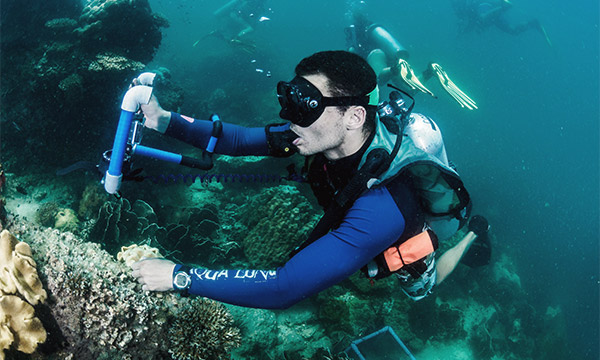
Restoring coral reefs is an urgent global priority, but many projects are small-scale, poorly located and fail to deliver their stated objectives. This PhD will explore ways of improving restoration outcomes by quantifying the long-term ecological impacts of successful projects, identifying ecological processes that could help deliver increased benefits, and setting appropriate global targets for coral restoration.
You will design and carry out your own research, with the support of an international supervisory team and in collaboration with globally influential industry partners. Your work will combine fieldwork, data analysis and modelling, to address topics including:
Quantifying decadal outcomes – what are the ecological benefits of ten years of coral restoration at a world-leading large-scale restoration project?
Identifying ecological processes for scale-up – how can additional restoration interventions deliver maximal ecological recovery (e.g. use of mixed restoration methods in the same location; combining terrestrial and marine restoration; designing restoration to include multiple habitat types)?
Establishing global targets for coral restoration – how much restoration would be required to achieve different levels of ecosystem service benefits in specific locations?
You will join Lancaster Environment Centre (https://www.lancaster.ac.uk/lec/) and the LEC-REEFs research group (https://lec-reefs.org/), where you will receive comprehensive training and extensive opportunities to engage with networks of academics, researchers, businesses and policy makers. You will work alongside project partner Mars Incorporated, whose ‘Building Coral’ programme (https://www.buildingcoral.com/) will provide the opportunity to conduct fieldwork at Bontosua Island, access a ten-year restoration monitoring dataset, and co-design research questions with restoration practitioners to deliver meaningful global impact.
General eligibility criteria: International and UK students are all eligible to apply, with full fees and stipend funded. Enthusiasm, self-motivation, resilience, curiosity and the ability to communicate to a range of audiences are all distinctly advantageous qualities for a PhD candidate. Applicants would normally be expected to hold a minimum of a UK Honours degree at 2:1 level or equivalent in any relevant international degree course. Applicants who have gained experience in relevant fields through non-traditional routes are strongly encouraged to apply. We welcome applications from Black, Asian and Ethnic Minorities candidates, candidates who are in the first generation of their family to go to university, candidates who have been in care or who have been a young carer, and candidates from a low-income background. English language requirements for international students
Project specific criteria: The ideal candidate will have an interest in coral reef ecology and ecosystem restoration, and a Master's degree in a relevant biological discipline. The project will require international collaboration, quantitative data analysis, fieldwork in Indonesia and excellent written and verbal science communication. Experience in these areas will be an advantage.
Studentship funding: This is a fully funded studentship of 3.5 years, including all student fees and a tax-free stipend at the standard UKRI rate. International students are eligible.
Enquiries: Interested applicants are welcome to get in touch to learn more about the PhD project. Please contact Dr Tim Lamont, tim.lamont@lancaster.ac.uk for more information.
Dates
Deadline for applications: 30 January 2026
Provisional Interview Date: week of 17 February 2026
Complete the Application Form, renaming the document with your 'Name and Application Form' e.g., Joe Bloggs Application Form.
Submit the completed Application Form, a CV, and a sample of your academic writing (for example a research paper that you wrote as first author, or your undergraduate or Master's dissertation) to lec.pgr.applications@lancaster.ac.uk.
Please note only Word or pdf files are accepted.
Rename the referee form with your ‘Name and Reference’, e.g., Joe Bloggs Reference. Send the renamed reference form to two referees and request them to forward the referee document to lec.pgr.applications@lancaster.ac.uk
Please note only Word or pdf files are accepted. It is important that you ensure references are submitted by the closing date or as soon as possible.
You will receive a generic acknowledgement in receipt of successfully sending the application documents.
Please note that only applications submitted as per these instructions will be considered.
Please note that, if English is not your first language, you will be required to provide evidence of your proficiency in English. This evidence is only required if you are offered a funded PhD and is not required as part of this application process.
Please note that, if you do not hear from us within four weeks of the closing date then you have been unsuccessful on this occasion. If you would like feedback on your application, please contact the supervisors of the project.
Dr Tim Lamont, Lancaster Environment Centre (Lancaster);
Professor Jan Bebbington, Pentland Centre for Sustainability in Business (Lancaster)
Project description:
The private sector has both the resources and incentives to rebuild nature, with businesses worldwide collectively pledging to plant trees and restore natural ecosystems. Many of these corporate environmental efforts are hampered, however, by poor planning, inadequate monitoring and a lack of robust reporting of impacts and outcomes. These failures result in accusations of greenwashing, and the potentially transformative power of business-led ecological restoration is failing to reach its potential.
In this PhD, you will investigate the impacts of business-led environmental projects, and develop reporting strategies and interpretation tools that increase the transparency of corporate efforts. You will design and carry out your own research, with a supportive supervisory team and in collaboration with globally influential industry partners. Your work will address topics including:
Assessing corporate sustainability reports – what do businesses claim to achieve in their environmental work, and how do they evidence and assure these claims?
Evaluating the impact of new corporate legislation – how have recent guidelines and frameworks changed corporate reporting practice in recent years (e.g. the Global Reporting Initiative, the Taskforce for Nature-Related Financial Disclosures)?
Establishing new tools for interpreting sustainability disclosures – how can AI advances help to analyse large-scale corporate reporting data, and provide usable outputs for shareholders, regulators and consumers to hold businesses to account?
You will join Lancaster Environment Centre and the Pentland Centre for Sustainability in Business, where you will receive comprehensive training and extensive opportunities to engage with academic, research and industrial and policy networks. You will work alongside project partners who are developing reporting standards, allowing you to co-design research questions with industry partners to deliver meaningful global impact.
General eligibility criteria: Enthusiasm, self-motivation, resilience, curiosity and the ability to communicate to a range of audiences are all distinctive and advantageous qualities for a PhD candidate. Applicants would normally be expected to hold a minimum of a UK Honours degree at 2:1 level or equivalent in a relevant degree course. However, applicants who have gained experience in relevant fields through non-traditional routes are strongly encouraged to apply. We welcome applications from Black, Asian and Ethnic Minorities candidates, candidates who are in the first generation of their family to go to university, candidates who have been in care or who have been a young carer, and candidates from a low-income background.
Project specific criteria: The ideal candidate will have an interest in corporate sustainability, and a Master's degree in a relevant ecological, business or accounting discipline. The project will require interdisciplinary collaboration, qualitative and quantitative data analysis, evaluation of corporate sustainability disclosures and excellent written and verbal science communication. Experience in these areas will be an advantage.
Studentship funding: This is a fully funded studentship of 3.5 years, including all student fees and a tax-free stipend at the standard UKRI rate. Only UK/Home students are eligible to apply.
Enquiries: Interested applicants are welcome to get in touch to learn more about the PhD project. Please contact Dr Tim Lamont, tim.lamont@lancaster.ac.uk for more information.
Dates
Deadline for applications: 30 January 2026
Provisional Interview Date: week of 17 February 2026
Rename the referee form with your ‘Name and Reference’, e.g., Joe Bloggs Reference. Send the renamed reference form to two referees and request them to forward the referee document to lec.pgr.applications@lancaster.ac.uk
Please note only Word or pdf files are accepted. It is important that you ensure references are submitted by the closing date or as soon as possible.
You will receive a generic acknowledgement in receipt of successfully sending the application documents.
Please note that only applications submitted as per these instructions will be considered.
Please note that, if English is not your first language, you will be required to provide evidence of your proficiency in English. This evidence is only required if you are offered a funded PhD and is not required as part of this application process.
Please note that, if you do not hear from us within four weeks of the closing date then you have been unsuccessful on this occasion. If you would like feedback on your application, please contact the supervisors of the project.
Bebbington et al. 2024, Shaping nature outcomes in corporate settings. Philosophical Transactions of the Royal Society B. https://doi.org/10.1098/rstb.2022.0325
Elliot et al. 2024, Biodiversity reporting: standardization, materiality, and assurance. Current Opinion in Environmental Sustainability. https://doi.org/10.1016/j.cosust.2024.101435
Supervisors
Dr Katie Miles (Earth Science and Physical Geography, LEC), Dr Henry Moss (MARS, Mathematical Sciences), and Dr Amber Leeson (Environmental Science, LEC)
Project Description
This PhD project will advance capabilities in the detection of supraglacial lake drainage events on the Greenland Ice Sheet (GrIS) and assess the impact of these events on ice dynamics. The project will utilise both remote sensing and machine learning methods, with flexibility to tailor the project according to the student’s interests. A methodology for supraglacial lake drainage detection will be scaled-up to year-round ice-sheet-wide monitoring, using a high-data-volume approach to achieve near-daily temporal resolution. Machine learning methods (e.g., convnets or Unets) will be used to extract spatiotemporal patterns, and the archive of available Earth Observation data used to create a multi-year and year-round database of GrIS supraglacial lake drainage events. This database will then be used to assess the year-round impact of drainage events, using climate and glaciological data and scalable statistical methods to assess the impact on ice dynamics over a range of spatial and temporal scales.
General eligibility criteria
Enthusiasm, independence, self-motivation, curiosity and the ability to communicate to a range of audiences are all distinctly advantageous qualities for a PhD. Applicants would normally be expected to hold a minimum of a UK Honours degree at 2:1 level or equivalent in a relevant degree course. However, applicants who have gained experience in relevant fields through non-traditional routes are strongly encouraged to apply. We particularly welcome applications from Black, Asian or Ethnic Minorities candidates, candidates who are in the first generation of their family to go to university, candidates who have been in care or who have been a young carer, and candidates from a low-income background.
The ideal candidate will have an interest in Glaciology, remote sensing, and/or machine learning methods. Experience in any of these aspects is desirable but not essential.
Studentship funding
A tax-free stipend will be paid at the standard UKRI rate. This is a fully funded studentship of 3.5 years for UK/Home students.
Enquiries
Interested applicants are welcome to get in touch to learn more about the PhD project. Please contact Dr Katie Miles (k.miles1@lancaster.ac.uk) for more information.
Rename the referee form with your ‘Name and Reference’, e.g., Joe Bloggs Reference. Send the renamed reference form to two referees and request them to forward the referee document to lec.pgr.applications@lancaster.ac.uk
Please note only Word or pdf files are accepted. It is important that you ensure references are submitted by the closing date or as soon as possible.
You will receive a generic acknowledgement in receipt of successfully sending the application documents.
Please note that only applications submitted as per these instructions will be considered.
Please note that, if English is not your first language, you will be required to provide evidence of your proficiency in English. This evidence is only required if you are offered a funded PhD and is not required as part of this application process.
Please note that, if you do not hear from us within four weeks of the closing date then you have been unsuccessful on this occasion. If you would like feedback on your application, please contact the supervisors of the project.
Christoffersen, P. et al., (2018), Cascading lake drainage on the Greenland Ice Sheet triggered by tensile shock and fracture, Nature Communications, 9, 1064, doi.org/10.1038/s41467-018-03420-8
Dean, C. et al. (under review), A decade of winter supraglacial lake drainage across Northeast Greenland using C-band SAR, The Cryosphere Discussions, doi.org/10.5194/egusphere-2025-4588
Dunmire, D. et al., (2025), Greenland Ice Sheet wide supraglacial lake evolution and dynamics: insights from the 2018 and 2019 melt seasons, Earth and Space Science, 12, 2, doi.org/10.1029/2024EA003793
Leeson, A. et al., (2015), Supraglacial lakes on the Greenland ice sheet advance inland under warming climate, Nature Climate Change, 5, 51–55, doi.org/10.1038/nclimate2463
Miles, K., et al., (2017), Toward monitoring surface and subsurface lakes on the Greenland Ice Sheet using Sentinel-1 SAR and Landsat-8 OLI imagery, Frontiers in Earth Science, 5, doi.org/10.3389/feart.2017.00058
Supervisors
Dr Antonio Allegretti and Professor Christina Hicks (Human Geography group, Lancaster Environment Centre)
Project Description
Food heritage offers an underexplored entry point into debates on sustainable blue economy and growth that have become mainstream in the Western Indian Ocean. Focused on coastal East African food heritage, this project combines theoretical perspectives to foreground contemporary coastal food heritage in East Africa as both a complex cultural label and political claim. It draws from anthropological understanding of transnationalism and ‘globalisation’ to delve into transnational histories and current transcultural exchanges behind food heritage, as well as political ecology to foreground contested claims over knowledge, authority and ecological relations underlying food heritage. The combination of approaches enables an investigation of the historical and current dynamics that make coastal East Africa a region renowned for its cuisine while being affected by food insecurity. Understanding these complexities in the context of the Blue Economy is important for sustainable growth of the region that safeguards food and cultural sovereignty of coastal communities.
General eligibility criteria
Enthusiasm, independence, self-motivation, curiosity and the ability to communicate to a range of audiences are all distinctly advantageous qualities for a PhD. Applicants would normally be expected to hold a minimum of a UK Honours degree at 2:1 level or equivalent in a relevant degree course. However, applicants who have gained experience in relevant fields through non-traditional routes are strongly encouraged to apply. We particularly welcome applications from Black, Asian or Ethnic Minorities candidates, candidates who are in the first generation of their family to go to university, candidates who have been in care or who have been a young carer, and candidates from a low-income background.
The ideal candidate will have an interest in marine social sciences gained through experience of conducting primary or secondary research (e.g. for undergraduate and/or postgraduate final dissertations)
Bachelor 2.1 in social sciences (Human Geography, Anthropology, Sociology, Development Studies, African Studies)
Desirable: Master's degree in social sciences (Human Geography, Anthropology, Sociology, Development Studies, African Studies, Political Ecology)
Some experience of social science fieldwork in the Global South, using social science methods (interviews, focus group discussions, participatory research)
Studentship funding
A tax-free stipend will be paid at the standard UKRI rate. This is a fully funded studentship of 3.5 years for UK/Home students.
Enquiries: Interested applicants are welcome to get in touch to learn more about the PhD project. Please contact Antonio Allegretti (a.allegretti@lancaster.ac.uk) for more information.
Rename the referee form with your ‘Name and Reference’, e.g., Joe Bloggs Reference. Send the renamed reference form to two referees and request them to forward the referee document to lec.pgr.applications@lancaster.ac.uk
Please note only Word or pdf files are accepted. It is important that you ensure references are submitted by the closing date or as soon as possible.
You will receive a generic acknowledgement in receipt of successfully sending the application documents.
Please note that only applications submitted as per these instructions will be considered.
Please note that, if English is not your first language, you will be required to provide evidence of your proficiency in English. This evidence is only required if you are offered a funded PhD and is not required as part of this application process.
Please note that, if you do not hear from us within four weeks of the closing date then you have been unsuccessful on this occasion. If you would like feedback on your application, please contact the supervisors of the project.
Bendix, R., Eggert, A., and Peselmann, A. (2012). Heritage regimes and the state. Universitätsverlag Göttingen.
Edelman, M., Weis, T., Baviskar, A., Borras, S. M., Holt-Giménez, E., Kandiyoti, D., & Wolford, W. (2014). Introduction: critical perspectives on food sovereignty. The Journal of Peasant Studies, 41(6), 911–931. https://doi.org/10.1080/03066150.2014.963568
Henderson, J., Breen, C., Esteves, L., La Chimia, A., Lane, P., Macamo, S., Marvin, G., & Wynne-Jones, S. (2021). Rising from the Depths Network: A Challenge-Led Research Agenda for Marine Heritage and Sustainable Development in Eastern Africa. Heritage, 4(3), 1026–1048. https://doi.org/10.3390/heritage4030057
Trubek, A. B. (2008). The taste of place: A Cultural Journey Into Terroir. Univ of California Press.
Waterton, E., and Watson, S. (2015). The Palgrave Handbook of Contemporary Heritage Research. Palgrave Macmillan
Wilk, R. (2006). Home cooking in the Global Village: Caribbean Food from Buccaneers to Ecotourists. Berg.
Supervisors
Dr Gemma Fenwick, Professor Nick Graham and Dr James Robinson
Project Description
Coral reefs are rapidly changing under climate stress and human pressures, yet we still lack a clear understanding of how processes occurring at different depths shape their ability to recover or shift into alternative ecological states. Although many reefs extend from shallow waters into mesophotic zones, most models treat them as uniform systems, overlooking depth-specific patterns in connectivity, settlement success, and ecosystem resilience. This project will explore how depth-structured connectivity pathways and early-life bottlenecks influence reef recovery dynamics. Using available ecological, genetic, and environmental datasets alongside connectivity and state-shift modelling frameworks, the research will identify which reef areas act as potential larval sources, refuges, or vulnerable transition zones across depth bands. By integrating depth-sensitive processes into predictive models, the project aims to improve our understanding of how reefs may respond to future climate and human impacts, offering insights valuable for conservation planning and resilience-based management.
General eligibility criteria
Enthusiasm, independence, self-motivation, curiosity and the ability to communicate to a range of audiences are all distinctly advantageous qualities for a PhD. Applicants would normally be expected to hold a minimum of a UK Honours degree at 2:1 level or equivalent in a relevant degree course. However, applicants who have gained experience in relevant fields through non-traditional routes are strongly encouraged to apply. We particularly welcome applications from Black, Asian or Ethnic Minorities candidates, candidates who are in the first generation of their family to go to university, candidates who have been in care or who have been a young carer, and candidates from a low-income background.
Rename the referee form with your ‘Name and Reference’, e.g., Joe Bloggs Reference. Send the renamed reference form to two referees and request them to forward the referee document to lec.pgr.applications@lancaster.ac.uk
Please note only Word or pdf files are accepted. It is important that you ensure references are submitted by the closing date or as soon as possible.
You will receive a generic acknowledgement in receipt of successfully sending the application documents.
Please note that only applications submitted as per these instructions will be considered.
Please note that, if English is not your first language, you will be required to provide evidence of your proficiency in English. This evidence is only required if you are offered a funded PhD and is not required as part of this application process.
Please note that, if you do not hear from us within four weeks of the closing date then you have been unsuccessful on this occasion. If you would like feedback on your application, please contact the supervisors of the project.
Bongaerts, P., Smith, T.B. (2019) Beyond the “Deep Reef Refuge” Hypothesis: A Conceptual Framework to Characterize Persistence at Depth. In: Loya, Y., Puglise, K., Bridge, T. (eds) Mesophotic Coral Ecosystems. Coral Reefs of the World, vol 12. Springer, Cham. https://doi.org/10.1007/978-3-319-92735-0_45
Doropoulos, C., Thomson, D.P., Trapon, M. et al. (2020) Depth gradients drive changes in early successional community composition and associated coral larvae settlement interactions. Marine Biology 167: 59. https://doi.org/10.1007/s00227-020-3670-6
Gamoyo, M., Obura, D., Reason, C.J.C. (2019) Estimating Connectivity Through Larval Dispersal in the Western Indian Ocean. Journal of Geophysical Research: Biogeosciences124(8): 2446-2459. https://doi.org/10.1029/2019JG005128
Lesser, M.P., Slattery, M., Mobley, C.D. (2018) Biodiversity and Functional Ecology of Mesophotic Coral Reefs. Annual Review Ecology, Evolution, and Systematics49: 49-71. https://doi.org/10.1146/annurev-ecolsys-110617-062423
Serrano X., Baums, I.B., O’Reilly, K. et al. (2014) Geographic differences in vertical connectivity in the Caribbean coral Montastraea cavernosa despite high levels of horizontal connectivity at shallow depths. Molecular Ecology23(17): 4226-4240. https://doi.org/10.1111/mec.12861
Van Oppen, M.J.H., Bongaerts, P., Underwood, J.N. et al. (2011) The role of deep reefs in shallow reef recovery: an assessment of vertical connectivity in a brooding coral from west and east Australia. Molecular Ecology 20(8): 1647-1660. https://doi.org/10.1111/j.1365-294X.2011.05050.x
Supervisors
Professor Ian Dodd and Professor Elizabete Carmo-Silva (Plant Biology)
Project Description
After 2025’s dry summer, are you concerned about whether UK crops can adapt to climate change ? If you enjoy consuming legumes you should be, as they are the most climate-sensitive of the major arable crops. By identifying genetic variation in physiological and biochemical processes (e.g. transpiration responses to evaporative demand, root hydraulic responses to soil drying, thermotolerance of photosynthesis) that determine faba bean climate resilience, you will assimilate new skills to determine adaptive plant phenotypes. You will utilise unique facilities including the Wolfson Centre for Photosynthetic Diversity, bespoke whole plant gas exchange chambers and high throughput immunological and biochemical assays. Via collaborations with UK bean breeders and LEC’s extensive suite of field-portable gas exchange instrumentation, you can access breeders’ trials (that assess crop yields) to measure crop responses in the field. Opportunities exist for short research stays at laboratories of our international partner to acquire further bespoke techniques.
General eligibility criteria
Enthusiasm, independence, self-motivation, curiosity and the ability to communicate to a range of audiences are all distinctly advantageous qualities for a PhD. Applicants would normally be expected to hold a minimum of a UK Honours degree at 2:1 level or equivalent in a relevant degree course. However, applicants who have gained experience in relevant fields through non-traditional routes are strongly encouraged to apply. We particularly welcome applications from Black, Asian or Ethnic Minorities candidates, candidates who are in the first generation of their family to go to university, candidates who have been in care or who have been a young carer, and candidates from a low-income background.
The ideal candidate will have an interest in contributing towards the development of climate resilient crops for future food security. A background in plant stress biology and a desire to develop plant physiology and biochemistry skills are desirable. Distinct advantages would be a growth mindset, whereby we learn from mistakes to improve our work, and a desire to contribute to pushing forward the boundaries of plant water deficit research.
Studentship funding
A tax-free stipend will be paid at the standard UKRI rate. This is a fully funded studentship of 3.5 years for UK/Home students.
Enquiries: Interested applicants are welcome to get in touch to learn more about the PhD project. Please contact Professor Ian Dodd i.dodd@lancaster.ac.uk for more information.
Rename the referee form with your ‘Name and Reference’, e.g., Joe Bloggs Reference. Send the renamed reference form to two referees and request them to forward the referee document to lec.pgr.applications@lancaster.ac.uk
Please note only Word or pdf files are accepted. It is important that you ensure references are submitted by the closing date or as soon as possible.
You will receive a generic acknowledgement in receipt of successfully sending the application documents.
Please note that only applications submitted as per these instructions will be considered.
Please note that, if English is not your first language, you will be required to provide evidence of your proficiency in English. This evidence is only required if you are offered a funded PhD and is not required as part of this application process.
Please note that, if you do not hear from us within four weeks of the closing date then you have been unsuccessful on this occasion. If you would like feedback on your application, please contact the supervisors of the project.
Mandour H, Khazaei H, Stoddard FL, Dodd IC. (2023) Identifying physiological and genetic determinants of faba bean transpiration response to evaporative demand. Annals of Botany. 131:533-544.
Jauregui I, Rothwell SA, Taylor SH, Parry MA, Carmo-Silva E, Dodd IC. (2018) Whole plant chamber to examine sensitivity of cereal gas exchange to changes in evaporative demand. Plant Methods. 14:97.
Gjindali A, Page R, Ashton CJ, Robertson I, Page MT, Bloemers D, Gould PD, Worrall D, Orr DJ, Carmo‐Silva E. (2025) Two cowpea Rubisco activase isoforms for crop thermotolerance. New Phytologist. 247:1199-1217.
Supervisors
Dr Imke Grefe (Environmental Science), Dr Suzi Ilic (Earth Science and Physical Geography), Dr Cai Ladd (Swansea University), Dr Mike Perring (UKCEH Bangor)
Project Description
Saltmarsh ecosystems are important, yet diminished, biodiversity hotspots, refuge for overwintering birds, carbon sinks, and barriers to coastal flooding. Significant funding and effort are being invested in restoring saltmarshes and improving the coastal environment and quality of life for local communities. However, factors affecting the success of saltmarsh restoration are not well understood. A key gap is how nutrient levels either promote or harm saltmarsh plant growth, and how these interact with coastal currents, impacting the success of restoration projects. For this PhD, you will investigate the crucial links between coastal morphodynamics, biogeochemistry, and ecology to optimise restoration and conservation methods, and improve saltmarsh habitats and the life of coastal communities. You will be supported by a multidisciplinary team, including academic and industry partners, and work on live restoration projects.
General eligibility criteria
Enthusiasm, independence, self-motivation, curiosity and the ability to communicate to a range of audiences are all distinctly advantageous qualities for a PhD. Applicants would normally be expected to hold a minimum of a UK Honours degree at 2:1 level or equivalent in a relevant degree course. However, applicants who have gained experience in relevant fields through non-traditional routes are strongly encouraged to apply. We particularly welcome applications from Black, Asian or Ethnic Minorities candidates, candidates who are in the first generation of their family to go to university, candidates who have been in care or who have been a young carer, and candidates from a low-income background.
The ideal candidate will have an interest in coastal environments and their communities. Enthusiasm for field studies in coastal environments, working with nature, as well as developing partnerships with local communities is essential. We are considering applicants from a wide range of backgrounds bringing a passion for coastal ecosystems, with subject specific training and support being available throughout the PhD.
Studentship funding
A tax-free stipend will be paid at the standard UKRI rate. This is a fully funded studentship of 3.5 years for UK/Home students.
Enquiries: Interested applicants are welcome to get in touch to learn more about the PhD project. Please contact Dr Imke Grefe (i.grefe@lancaster.ac.uk) for more information.
Rename the referee form with your ‘Name and Reference’, e.g., Joe Bloggs Reference. Send the renamed reference form to two referees and request them to forward the referee document to lec.pgr.applications@lancaster.ac.uk
Please note only Word or pdf files are accepted. It is important that you ensure references are submitted by the closing date or as soon as possible.
You will receive a generic acknowledgement in receipt of successfully sending the application documents.
Please note that only applications submitted as per these instructions will be considered.
Please note that, if English is not your first language, you will be required to provide evidence of your proficiency in English. This evidence is only required if you are offered a funded PhD and is not required as part of this application process.
Please note that, if you do not hear from us within four weeks of the closing date then you have been unsuccessful on this occasion. If you would like feedback on your application, please contact the supervisors of the project.
Perring, M.P., Harley, J., Jones, L., Burden, A., Garbutt, A. 2024. Impacts of nutrients on
saltmarsh: A rapid evidence assessment. NEER152. Natural England.
McMahon, L., Ladd, C., Burden, A., Garrett, E., Redeker, K., Lawrence, P., & Gehrels, R. (2023). Maximizing blue carbon stocks through saltmarsh restoration. Frontiers in Marine Science, 10
Sousa, A. I., Lillebø, A. I., Pardal, M. A., & Caçador, I. (2010). Productivity and nutrient cycling in salt marshes: Contribution to ecosystem health. Estuarine, Coastal and Shelf Science, 87(4), 640-646.
Supervisors
Dr Kai Heron and Dr Emma Cardwell
Project Description
The commodification of food is the process where food shifts from being seen as a basic necessity, and thus a human right (as recognised in the UN Universal Declaration on Human Rights) towards an economic product valued primarily for its profit generating potential. Despite 170 states signing the International Covenant on Economic, Social and Cultural Rights, which enshrines the right to food, globally food access is increasingly controlled by a market-based, corporate food chain where access is based on ability to pay. While other development indices improve, the number of hungry people has been increasing worldwide. This political ecology PhD studies this conflict, asking how food is decommodified. The project aims to understand processes of commodification and decommodification at different scales. We invite applicants who are confident in qualitative research and keen to employ creative or innovative methods to make sense of commodification and the potential for transition.
General eligibility criteria
Enthusiasm, independence, self-motivation, curiosity and the ability to communicate to a range of audiences are all distinctly advantageous qualities for a PhD. Applicants would normally be expected to hold a minimum of a UK Honours degree at 2:1 level or equivalent in a relevant degree course. However, applicants who have gained experience in relevant fields through non-traditional routes are strongly encouraged to apply. We particularly welcome applications from Black, Asian or Ethnic Minorities candidates, candidates who are in the first generation of their family to go to university, candidates who have been in care or who have been a young carer, and candidates from a low-income background.
The ideal candidate will have a background in environmental social science, and an interest in political economy, farming or food. You will be confident in qualitative research methods, and excited about designing an innovative or creative PhD that will allow you to explore and communicate complex and timely philosophical and economic ideas.
Studentship funding
A tax-free stipend will be paid at the standard UKRI rate. This is a fully funded studentship of 3.5 years for UK/Home students.
Enquiries
Interested applicants are welcome to get in touch to learn more about the PhD project. Please contact Kai Heron k.heron@lancaster.ac.uk for more information.
Rename the referee form with your ‘Name and Reference’, e.g., Joe Bloggs Reference. Send the renamed reference form to two referees and request them to forward the referee document to lec.pgr.applications@lancaster.ac.uk
Please note only Word or pdf files are accepted. It is important that you ensure references are submitted by the closing date or as soon as possible.
You will receive a generic acknowledgement in receipt of successfully sending the application documents.
Please note that only applications submitted as per these instructions will be considered.
Please note that, if English is not your first language, you will be required to provide evidence of your proficiency in English. This evidence is only required if you are offered a funded PhD and is not required as part of this application process.
Please note that, if you do not hear from us within four weeks of the closing date then you have been unsuccessful on this occasion. If you would like feedback on your application, please contact the supervisors of the project.
Dr Sally Cawood, Human Geography/Political Ecology and Dr Giovanni Bettini, Human Geography/Critical Geographies
Project Description
In the ‘Wasteocene’ (Armiero 2021), waste and wasting relationships dominate, yet those who labour to clean our cities and manage waste in its different forms remain largely invisible. Waste work, though essential, remains devalued, with toxic harms and precarity distributed unequally across class, race, gender, caste and migration status.
Inspired by Vergès' (2024) call for 'decolonial' cleaning, this project situates cleaning and waste work within deep-seated histories and realities of (racial) capitalism, colonialism and the climate crisis to ask: how are certain people pushed into precarious ‘dirty work’ of different kinds? And to what extent does this work, in addition to harm and violence, offer autonomy, and enable solidarity and resistance?
Drawing on waste/discard studies, infrastructural geographies, political ecology and migration studies, the project will examine waste, labour and a broader politics of ‘cleaning’ in light of how climate change is reshaping ‘wastescapes’ today.
General eligibility criteria
Enthusiasm, independence, self-motivation, curiosity and the ability to communicate to a range of audiences are all distinctly advantageous qualities for a PhD. Applicants would normally be expected to hold a minimum of a UK Honours degree at 2:1 level or equivalent in a relevant degree course. However, applicants who have gained experience in relevant fields through non-traditional routes are strongly encouraged to apply. We particularly welcome applications from Black, Asian or Ethnic Minorities candidates, candidates who are in the first generation of their family to go to university, candidates who have been in care or who have been a young carer, and candidates from a low-income background.
The ideal candidate will have an interest in decolonial studies, discard/waste studies, infrastructural geographies/human geography, political ecology, migration studies and experience with qualitative and/or related methodologies (such as archival, participatory, ethnographic or arts-based methods). Project details will be developed in dialogue with the candidate, but we envision a multi-sited study combining qualitative methods, archival work and/or discourse analysis.
Studentship funding
A tax-free stipend will be paid at the standard UKRI rate. This is a fully funded studentship of 3.5 years for UK/Home students.
Enquiries: Interested applicants are welcome to get in touch to learn more about the PhD project. Please contact Sally Cawoods.cawood1@lancaster.ac.uk for more information.
Rename the referee form with your ‘Name and Reference’, e.g., Joe Bloggs Reference. Send the renamed reference form to two referees and request them to forward the referee document to lec.pgr.applications@lancaster.ac.uk
Please note only Word or pdf files are accepted. It is important that you ensure references are submitted by the closing date or as soon as possible.
You will receive a generic acknowledgement in receipt of successfully sending the application documents.
Please note that only applications submitted as per these instructions will be considered.
Please note that, if English is not your first language, you will be required to provide evidence of your proficiency in English. This evidence is only required if you are offered a funded PhD and is not required as part of this application process.
Please note that, if you do not hear from us within four weeks of the closing date then you have been unsuccessful on this occasion. If you would like feedback on your application, please contact the supervisors of the project.
Armiero, M. (2021). Wasteocene: Stories from the Global Dump. Cambridge, Cambridge University Press.
Vergès, F (2024). Making the World Clean: Wasted Lives, Wasted Environment, and Racial Capitalism. Cambridge, Mass. MIT Press.
Supervisors
Dr Stuart Sharp (Lancaster Environment Centre, Lancaster University), Professor Chris Jewell (School of Mathematical Science, Lancaster University), Dr Blanca Jimeno (Doñana Biological Station (EBD-CSIC), Spanish Research Council) and Assoc Professor Mark Ravinet (Department of Biosciences, University of Oslo)
Project Description
Natal dispersal, the movement of individuals from their birthplace to the site where they first breed, is a fundamental process in ecology with profound consequences for individual fitness and population dynamics. It is also a key mechanism by which animals respond to environmental change, so understanding dispersal has never been more important. However, despite enormous research effort, major knowledge gaps persist. This exciting project aims to tackle these issues by using a unique combination of field observations, long-term data, next-generation tracking, and cutting-edge molecular methods to investigate dispersal in a declining river bird, the white-throated dipper. Working with an interdisciplinary supervisory team on an established study population of dippers in the beautiful Yorkshire Dales National Park, the student will quantify the causes and consequences of variation in natal dispersal while accounting for emigration and mortality. The results will have vital implications for ecology, evolution and conservation.
General eligibility criteria
Enthusiasm, independence, self-motivation, curiosity and the ability to communicate to a range of audiences are all distinctly advantageous qualities for a PhD. Applicants would normally be expected to hold a minimum of a UK Honours degree at 2:1 level or equivalent in a relevant degree course. However, applicants who have gained experience in relevant fields through non-traditional routes are strongly encouraged to apply. We particularly welcome applications from Black, Asian or Ethnic Minorities candidates, candidates who are in the first generation of their family to go to university, candidates who have been in care or who have been a young carer, and candidates from a low-income background.
The ideal candidate will have an interest in the ecology and conservation of birds and/or movement ecology. Full training will be provided, but experience with any of the following would be advantageous: monitoring wild bird populations, radio-tracking, analysis of long-term data, molecular ecology. A full valid driving licence is required for fieldwork.
Studentship funding
A tax-free stipend will be paid at the standard UKRI rate. This is a fully funded studentship of 3.5 years for UK/Home students.
Enquiries: Interested applicants are welcome to get in touch to learn more about the PhD project. Please contact Stuart Sharp at s.sharp2@lancaster.ac.uk for more information.
Rename the referee form with your ‘Name and Reference’, e.g., Joe Bloggs Reference. Send the renamed reference form to two referees and request them to forward the referee document to lec.pgr.applications@lancaster.ac.uk
Please note only Word or pdf files are accepted. It is important that you ensure references are submitted by the closing date or as soon as possible.
You will receive a generic acknowledgement in receipt of successfully sending the application documents.
Please note that only applications submitted as per these instructions will be considered.
Please note that, if English is not your first language, you will be required to provide evidence of your proficiency in English. This evidence is only required if you are offered a funded PhD and is not required as part of this application process.
Please note that, if you do not hear from us within four weeks of the closing date then you have been unsuccessful on this occasion. If you would like feedback on your application, please contact the supervisors of the project.
Alvarez ND, Mawby P & Sharp SP (2025) Seasonal, environmental and individual determinants of double-brooding in the White-throated Dipper Cinclus cinclus. Ibis 168: 201-215 (https://doi.org/10.1111/ibi.13439)
Jimeno, B, Tangili M, Domínguez JC, Canal D, Camacho C, Potti J, García JT, Martínez-Padilla J & Ravinet M (2025) Epigenetic potential and dispersal propensity in a free-living songbird: a spatial and temporal approach. Molecular Ecology 34: e70143 (https://doi.org/10.1111/mec.70143)
Primary supervisor: Dr Marta Shocket; Co-supervisors: Dr Philip Donkersley and Dr Rosa Menendez Martinez.
Project Description
The changing climate has a profound impact on host-parasite interactions. Research to date investigated the effect of mean temperatures on disease transmission, whilst in nature temperature varies over multiple time scales and interacts with other stressors. The past environment can also affect host/parasite performance through trans-generational effects. The Thermal Mismatch Hypothesis is a predictive framework for how changes in temperature impact host-parasite interactions based on the thermal adaptation of the host but has not been rigorously tested in diverse organisms. This project will use either: 1) generalist fungal pathogens that infect insect hosts (e.g. Beauveria bassiana), or 2) Leishmania parasites in Lutzomyialongipalpis sand fly vectors. After an initial experimental period, the student with support from the supervisory team will establish a research plan to test the Thermal Mismatch Hypothesis, transgenerational effects, or other aspects of thermal performance. The project is aimed at advancing knowledge on host-parasite interactions to tackle the spread of infectious diseases.
General eligibility criteria
Enthusiasm, independence, self-motivation, curiosity and the ability to communicate to a range of audiences are all distinctly advantageous qualities for a PhD. Applicants would normally be expected to hold a minimum of a UK Honours degree at 2:1 level or equivalent in a relevant degree course. However, applicants who have gained experience in relevant fields through non-traditional routes are strongly encouraged to apply. We particularly welcome applications from Black, Asian or Ethnic Minorities candidates, candidates who are in the first generation of their family to go to university, candidates who have been in care or who have been a young carer, and candidates from a low-income background.
The ideal candidate will have a background in biology or ecology, a strong interest in the effects of climate on infectious disease, and a willingness to learn quantitative methods in ecology (such as advanced statistics, ecological modelling).
Studentship funding
A tax-free stipend will be paid at the standard UKRI rate. This is a fully funded studentship of 3.5 years for UK/Home students.
Enquiries: Interested applicants are welcome to get in touch to learn more about the PhD project. Please contact Marta Shocket m.shocket@lancaster.ac.uk) for more information.
Rename the referee form with your ‘Name and Reference’, e.g., Joe Bloggs Reference. Send the renamed reference form to two referees and request them to forward the referee document to lec.pgr.applications@lancaster.ac.uk
Please note only Word or pdf files are accepted. It is important that you ensure references are submitted by the closing date or as soon as possible.
You will receive a generic acknowledgement in receipt of successfully sending the application documents.
Please note that only applications submitted as per these instructions will be considered.
Please note that, if English is not your first language, you will be required to provide evidence of your proficiency in English. This evidence is only required if you are offered a funded PhD and is not required as part of this application process.
Please note that, if you do not hear from us within four weeks of the closing date then you have been unsuccessful on this occasion. If you would like feedback on your application, please contact the supervisors of the project.
Shocket et al. 2018. Parasite rearing and infection temperatures jointly influence disease transmission and shape seasonality of epidemics. Ecology, 99(9), 1975-1987.
Cohen et al. 2017. The thermal mismatch hypothesis explains host susceptibility to an emerging infectious disease. Ecology letters, 20(2), 184-193.
Molecular and trait-based approaches to studying climate adaptation in Anopheles gambiae malaria vectors
Supervisors: Marta Shocket, Lancaster Environment Centre, Lancaster University; Barbara Shih, Biomedical and Life Sciences, Lancaster University; Alexandre Benedetto, Biomedical and Life Sciences, Lancaster University
Project description: The ability of mosquitoes to adapt to climate change is poorly understood, and current models for transmission of mosquito-borne diseases under future climates do not incorporate evolution. This project will use molecular genetics and trait-based modelling approaches to study climate adaptation in Anopheles gambiae, the principal African vector of malaria. This project will provide insight into how mosquitoes might adapt to climate change and help to inform long-term strategies for malaria control.
Aim 1: Generating parameters for evolutionary rescue models
The student will re-analyse existing thermal performance data to generate estimates of selection intensity and phenotypic variance, two factors that are used in evolutionary rescue models to predict adaptation rates.
Aim 2: Linking climate variables to genetic features from sequencing data
The student will derive genetic variations from whole genome sequencing data and determine if metrics related to climate are associated with greater population-level genetic diversity or specific genetic variants.
General eligibility criteria: Applicants would normally be expected to hold a minimum of a UK Honours degree at 2:1 level or equivalent in a relevant degree course.
Project specific criteria: The ideal candidate will have an interest in infectious diseases and a background in one of several relevant areas: infectious disease biology, bioinformatics, ecological modelling, or entomology.
Studentship funding: A tax-free stipend will be paid at the standard UKRI rate; £20,780 in 2025/26. This is a fully funded studentship of 3.5 years for UK/Home students.
Enquiries: Interested applicants are welcome to get in touch to learn more about the PhD project. Please contact Marta Shocket m.shocket@lancaster.ac.uk for more information.
Dates
Deadline for candidate applications: 23 March 2026
Provisional Interview Date: April 2026
Start Date: October 2026
Further reading:
Couper, L.I., Farner, J.E., Caldwell, J.M., Childs, M.L., Harris, M.J., Kirk, D.G., et al. (2021) How will mosquitoes adapt to climate warming? eLife, 10.
Mordecai, E. A., Caldwell, J. M., Grossman, M. K., Lippi, C. A., Johnson, L. R., Neira, M., et al. (2019). Thermal biology of mosquito‐borne disease. Ecology letters, 22(10), 1690-1708.
Li, C., Gao, Y., Zhao, Z., Ma, D., Zhou, R., Wang, J., ... & Liu, Q. (2021). Potential geographical distribution of Anopheles gambiae worldwide under climate change. Journal of Biosafety and Biosecurity, 3(2), 125-130.
Pastusiak, A., Reddy, M.R., Chen, X. et al. A metagenomic analysis of the phase 2 Anopheles gambiae 1000 genomes dataset reveals a wide diversity of cobionts associated with field collected mosquitoes. Commun Biol 7, 667 (2024).
You will receive a generic acknowledgement in receipt of successfully sending the application documents.
Please note that only applications submitted as per these instructions will be considered.
Please note that, if English is not your first language, you will be required to provide evidence of your proficiency in English. This evidence is only required if you are offered a funded PhD and is not required as part of this application process.
Current PhD Opportunities - Envision Doctoral Training Partnership accordion
There are no funded opportunities at this time, please check back later.
How the application process works
Select the project you wish to apply for. You can make informal enquiries to the project supervisors if you wish. Please ensure that you check the application deadline dates and eligibility criteria.
Complete your application by following the links to the application form. At this stage, you are able to apply for more than one advertised project if you wish.
After the closing date, the Department will consider all applications. Shortlisted candidates will be invited for an interview. Interviews can be arranged by Skype or telephone. The timescale for this will vary but is in the region of 4 weeks.
If you are successful at interview for the studentship, you will be invited to formally apply via the admissions portal online. This ensures that you receive a formal offer of admission. Please submit one application only, and state the studentship that you have applied for in the source of funding section.
Once a formal offer has been made, you will need to check the conditions in your offer letter and supply any outstanding documents by the required deadlines. If your offer is unconditional then this will not apply to you.
You will find yourself taking advantage of several laboratory facilities at Lancaster Environment Centre. There are our £4.4 million Teaching Labs, for example, as well as specialist facilities for Environmental Chemistry, Noble Gas, and Plant and Soil Ecology.
Research Facilities
There are no fewer than 15 purpose-built glasshouse modules, 16 controlled environment plant growth rooms, 4 solar domes based at the Hazelrigg Weather Station and a suite of ultraviolet radiation research facilities that can truly claim to be world-class.
Field Sites
You could find yourself working at a range of catchment science sites across England and Wales, including the local River Eden Valley, or they can travel much further afield to the tropical forests of the Amazon and Borneo.
Cutting-Edge Technologies
You can be trained to use a range of equipment, such as our Stable Isotope Ratio Mass Spectrometer Facility, X-ray CT Scanner, Magnetometer or the LI-COR Portable Photosynthesis System, which has the capacity to measure plant gas exchange with exceptional speed and precision.
Rich Data Resources
Dedicated support staff with expertise in GIS, statistics, modelling, information technology and programming are available to provide specialist training in all aspects of data acquisition, processing and analysis.
Other methods of applying for a PhD
Studying for a research degree is a highly rewarding and challenging process. You'll work to become a leading expert in your topic area with regular contact and close individual supervision with your supervisor.
If you have your own research idea, we can help you to develop it. To begin this process you will need to find a PhD Supervisor from one of our research groups, whose research interests align with your own.
You can also apply for a PhD from one of the Doctoral Training Centres and Partnerships that work with the Graduate School for the Environment. Details of each of the Training Centres are provided here.